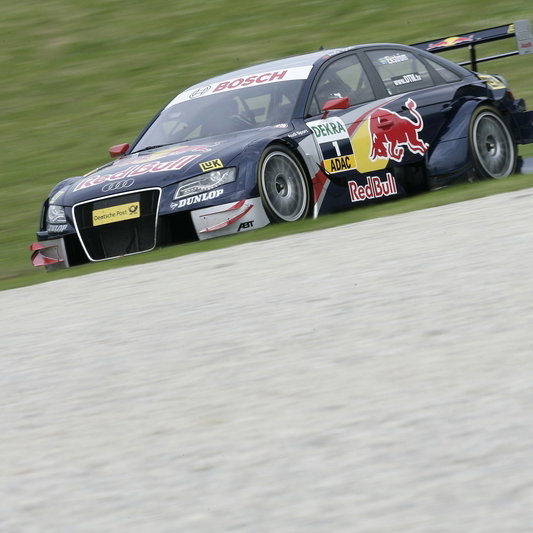
Q&A: Paul di Resta - EXCLUSIVE.
by Russell Atkins
TO HEAR THE INTERVIEW IN FULL: CLICK HERE
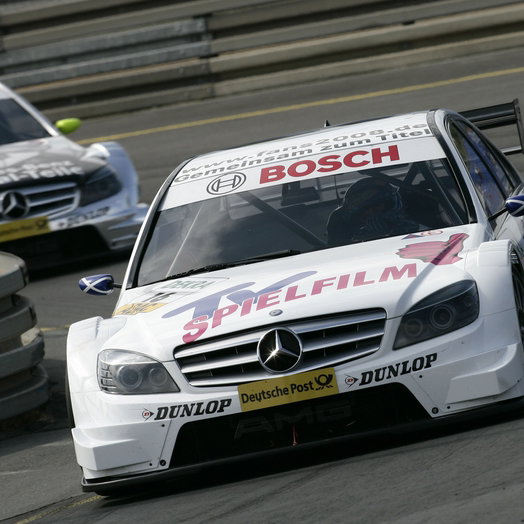
Paul di Resta made a strong impression in the DTM last year, despite driving a 2005-spec Mercedes C-Class during his debut campaign in the championship. In 2008, he underlines, he intends to be a full-on title contender.

by Russell Atkins
TO HEAR THE INTERVIEW IN FULL: CLICK HERE
Paul di Resta made a strong impression in the DTM last year, despite driving a 2005-spec Mercedes C-Class during his debut campaign in the championship. In 2008, he underlines, he intends to be a full-on title contender.
Even more noteworthy still in 2007 was the fact that the Scot achieved his fifth place in the championship standings having stepped across into the pan-European touring car series from single-seaters, where he had clinched the prestigious F3 Euroseries laurels the previous season. The 21-year-old told Crash.net Radio how he is aiming for bigger and better things still second time around...
Q:
First of all Paul, looking back over your first season in the DTM, how would you say the year went?
Paul di Resta:
I would say it was a good year; it was pretty satisfying. We were in a two-year-old car, and it would have been a tough challenge to make any more of an impact than we did. We've got to be happy.
We had four podiums - two seconds and two thirds - and a lot of good qualifying pace, but we were unfortunate. In the middle of the year I got taken off a few times at the first corner through no fault of my own, and if you take that into account I think we were in a strong position come the end of the year.
Q:
How much of a difference would you say there was between the 2005-spec car you were driving, and the 2007-spec machine? There seemed to be a far greater difference as the year progressed and the 2007 car increasingly developed...
PdR:
Of course; as you would expect, it would be a big problem if your new car didn't develop, whereas we had what had been the benchmark in 2005. You had to make the best of what you had; in some places it was enough and in some places it wasn't. We just had to make the maximum out of what that car could produce.
Q:
Back at the start of the year, before the season had begun, did you expect to be that much on the pace come the opening rounds?
PdR:
I wasn't too sure when I got told I was going to be in a two-year-old car, but after the winter testing it was quite clear how fast it was going to be. That meant it wasn't so much of a shock to me at the first race, because we knew we had good pace; it was a matter of how quickly I could get my head around the longer races, pit-stops and how race strategy worked. At the end of the day I was there to help the other guys, so hopefully I did a good job.
Q:
How much of a difference was it for you going from single-seaters into tin-tops?
PdR:
It was quite a big jump, and it took me a long time to get my head around it, but the car is pretty similar. It has good brakes and a lot of power, and the driving technique when you find the limit is quite close to what you would experience in a single-seater. Everybody at Mercedes and Persson all helped tremendously, and I owe a big thank you to them. They certainly made my year easier than it could have been.
Q:
After your excellent results in the first few races, was there a point when you thought 'I can win one of these'?
PdR:
Yeah, quite clearly. I think the strongest performance we were going to have was at the Norisring, but it rained before qualifying and I had never driven the car in the wet. That hampered us because we were in at least the top three in every session, including the warm-up, and it was all under control. We qualified eighth which wasn't too bad, but then got taken out at the first corner and still managed to set the second-fastest race lap. There were a couple of times when we thought 'ok, we've got the pace'; I would say we definitely had the pace to win the first race at Hockenheim, and didn't due to inexperience and some other issues. Overall, though, I think we had to be happy with the podium.
Q:
Looking ahead now to the fast-approaching 2008 campaign, how excited are you feeling about the start of it, and what do you think you can achieve this year?
PdR:
I'm very much looking forward to it. I have a year under my belt, and I'm not going in as a rookie now; I'm going in as a title contender. Hopefully people will think of me in that way, and I want to make an impact quite soon, score as many points as I can and progress on in the championship.
Q:
And victories too..?
PdR:
Of course; I don't think any driver can go into any year without expecting that. I went in last year expecting to, so hopefully this year what we expect we will do.
TO HEAR THE INTERVIEW IN FULL: CLICK HERE
In this article

More News
.jpg?aspect_ratio=1:1)