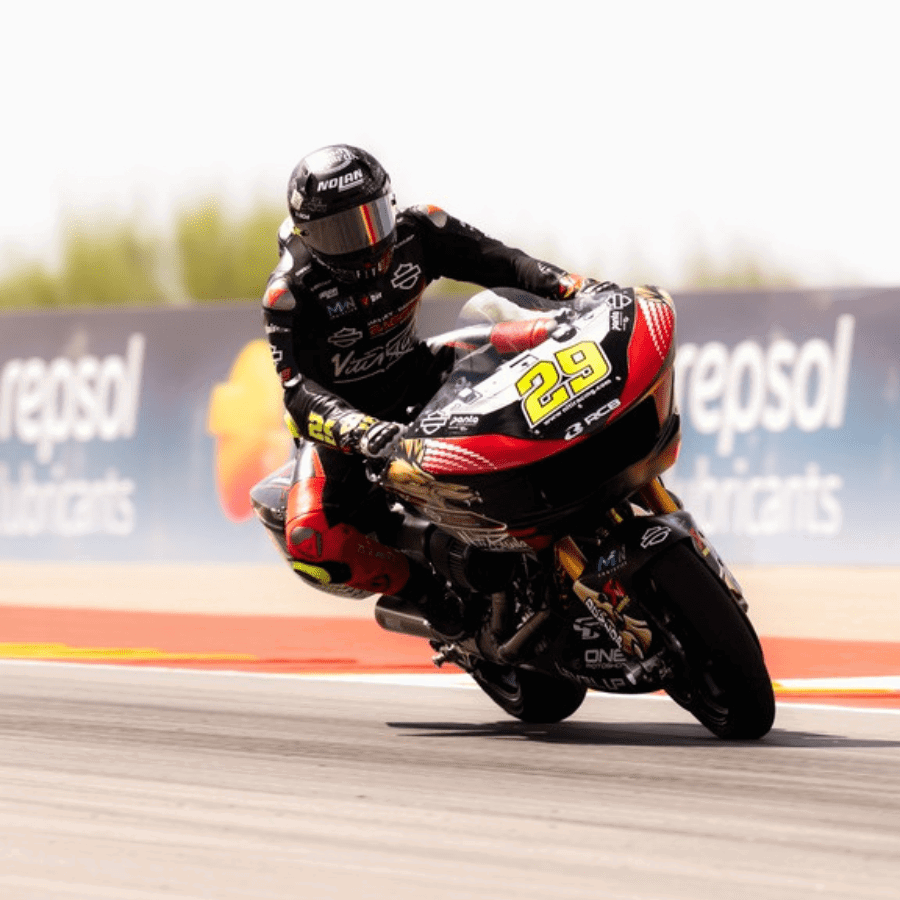
Dorna boss happy with CRT class

Dorna CEO Carmelo Ezpeleta feels that the first season of the inaugural CRT MotoGP class was 'a big success'.
The privateer 'Claiming Rule Team' regulations were brought in to boost flagging grid numbers and reduce MotoGP's reliance on official manufacturer entries, in decline due to soaring costs.
Without CRT there would have been just twelve entries in last year's world championship, but the cut-price Superbike-powered machines have faced criticism from both inside and outside of the MotoGP paddock due to a lack of competitiveness.
CRT machines are allowed more fuel and engine changes to help them compete with the official bikes from Honda, Yamaha and Ducati.
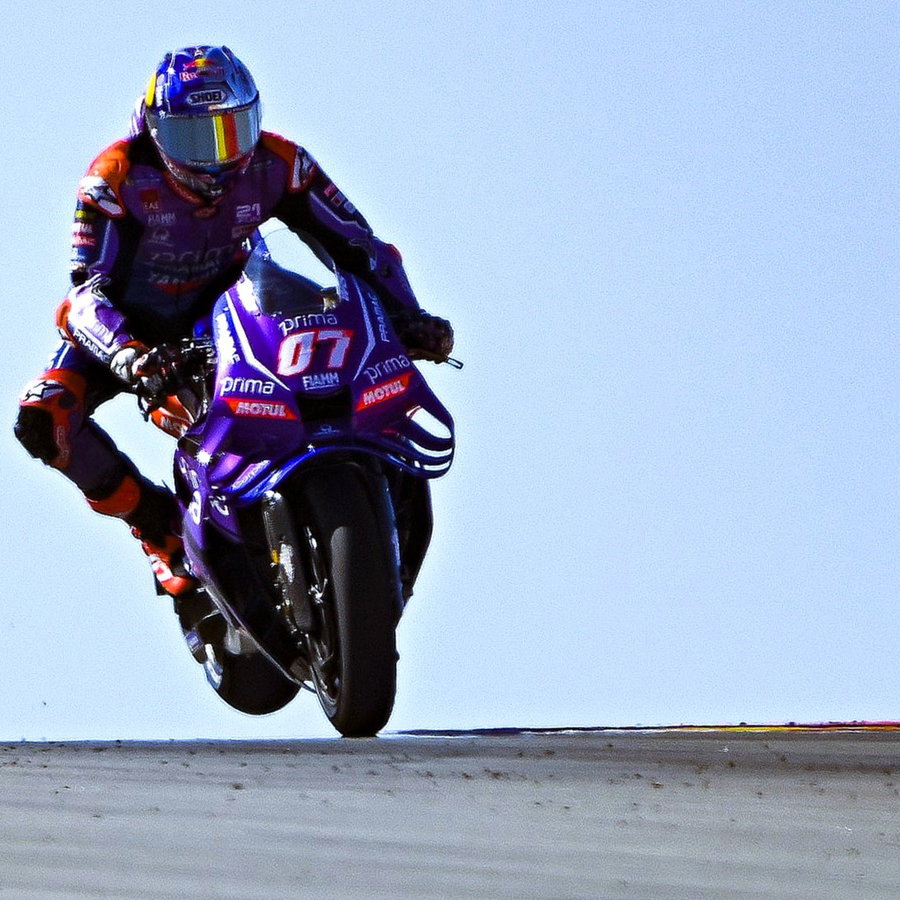
The best of the CRT entries - usually the Aspar-run Aprilias of Aleix Espargaro and Randy de Puniet - regularly threatened the slowest of the manufacturer bikes, but the main manufacturer pack remained well out of reach in normal conditions.
However a drying track at the Valencia finale saw CRT history made when Espargaro led the first two laps of the race, which also ended with Gresini's Michele Pirro claiming the CRT's top result so far of fifth place.
"In our opinion CRT has been a big success for 2012," Ezpeleta told the official MotoGP website. "I know [it was] in wet conditions... but in any case, a CRT was leading the Valencia Grand Prix."
Ezpeleta, like HRC vice president Shuhei Nakamoto, believes that the true difference between CRT and a full manufacturer MotoGP prototype would only be known if a top MotoGP rider gave it a try.
The likes of Colin Edwards and Randy de Puniet have previously claimed podiums in MotoGP, but a race winner is yet to sign up for CRT (Chris Vermeulen made a one-off appearance).
"Theoretically the riders that are using the CRT are not the top riders, and I want to see... though this is impossible... if any of the top riders would use a CRT, I don't know how big the difference would be," said Ezpeleta.
With one season under their belt, the CRTs will be expected to close the performance gap in 2013, when Bridgestone will also offer a softer rear tyre for the CRTs and some teams will run the new Magneti Marelli ECU, compulsory from 2014.
"This season they will have some improvement in the tyres, but also we will develop together with Marelli and some of them the new ECU that will be compulsory in 2014 for the non-factory teams. This gives us a big expectation."
This year's 24-rider premier-class grid will see an equal split between manufacturer and CRT entries, the privateer ranks swelling by three more machines relative to 2012.
Honda and Yamaha are expected to offer CRT specification machinery - a complete bike and engine supply respectively - from the 2014 season, when the fuel difference between manufacturer and CRT entries will increase to four litres.

Peter has been in the paddock for 20 years and has seen Valentino Rossi come and go. He is at the forefront of the Suzuki exit story and Marc Marquez’s injury issues.