One team's title sponsor 'disappointment' highlights Liberty’s huge MotoGP issue
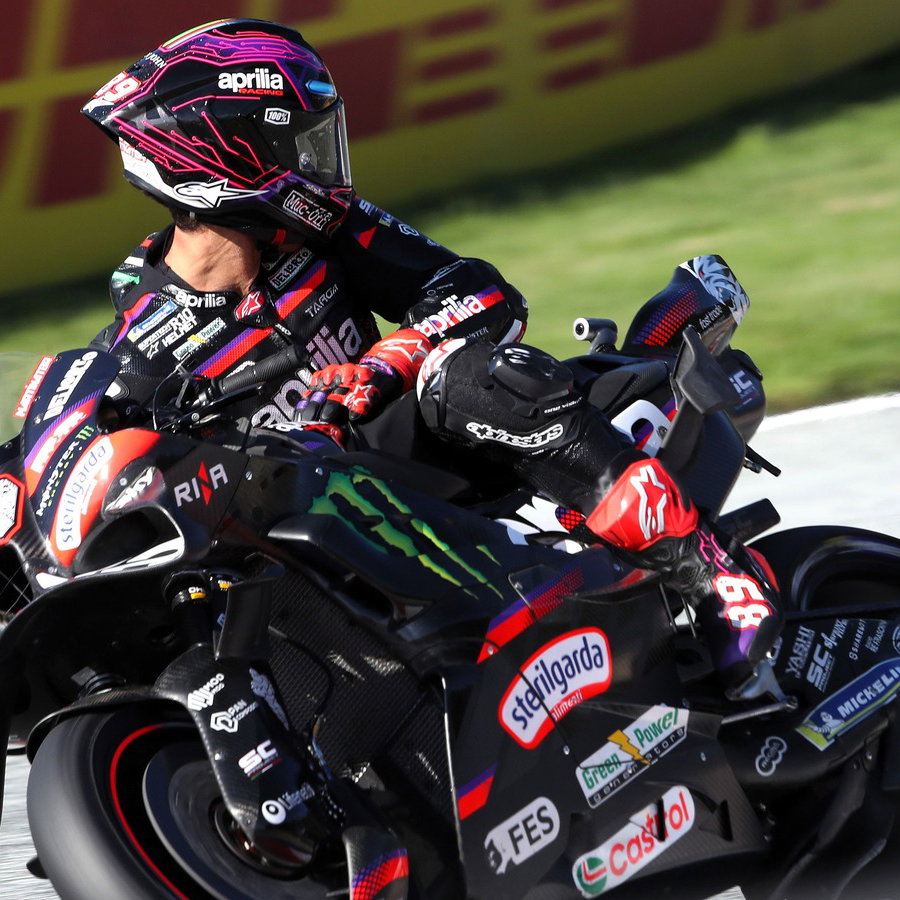
Aprilia has expressed disappointment at not securing a title partner for the 2026 MotoGP season

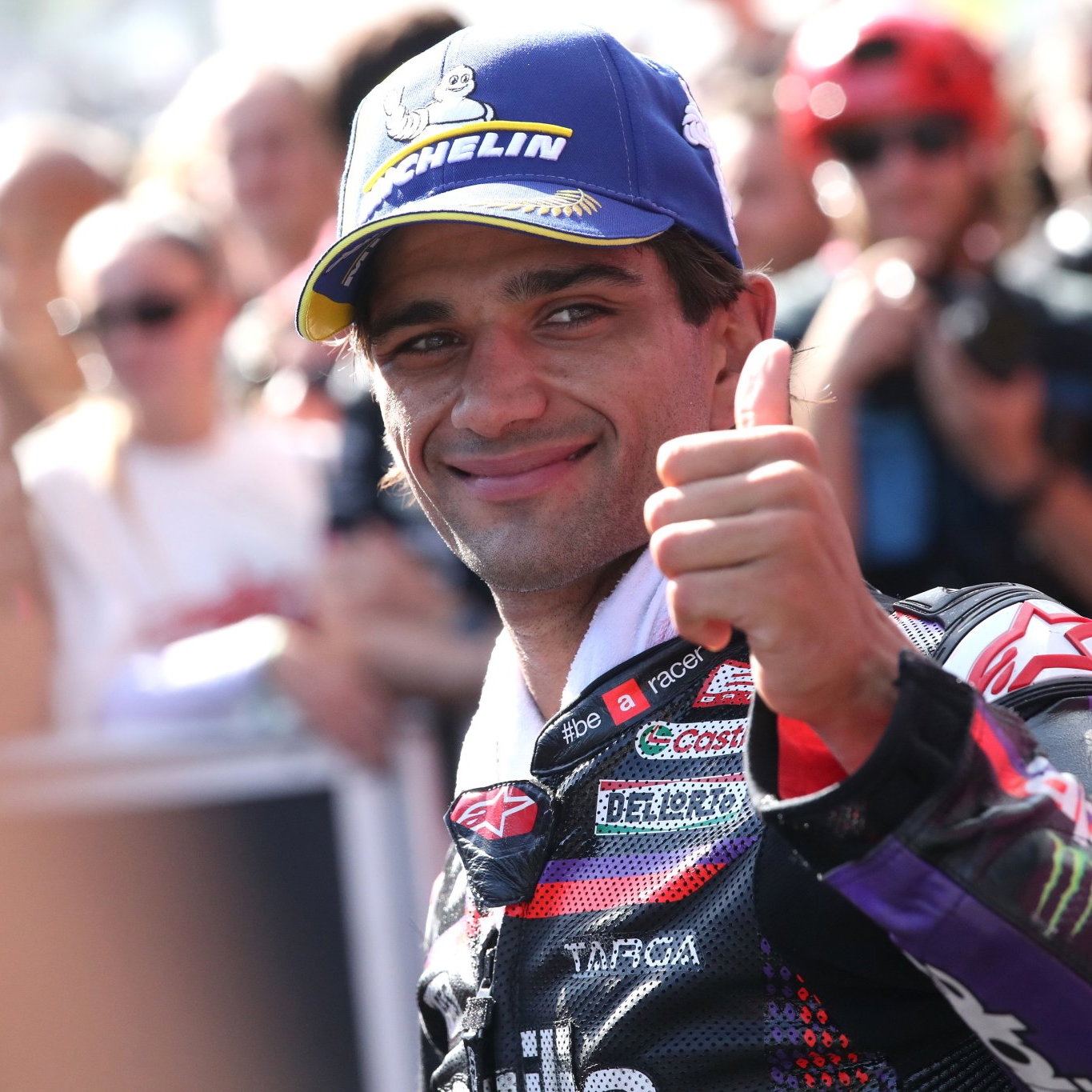
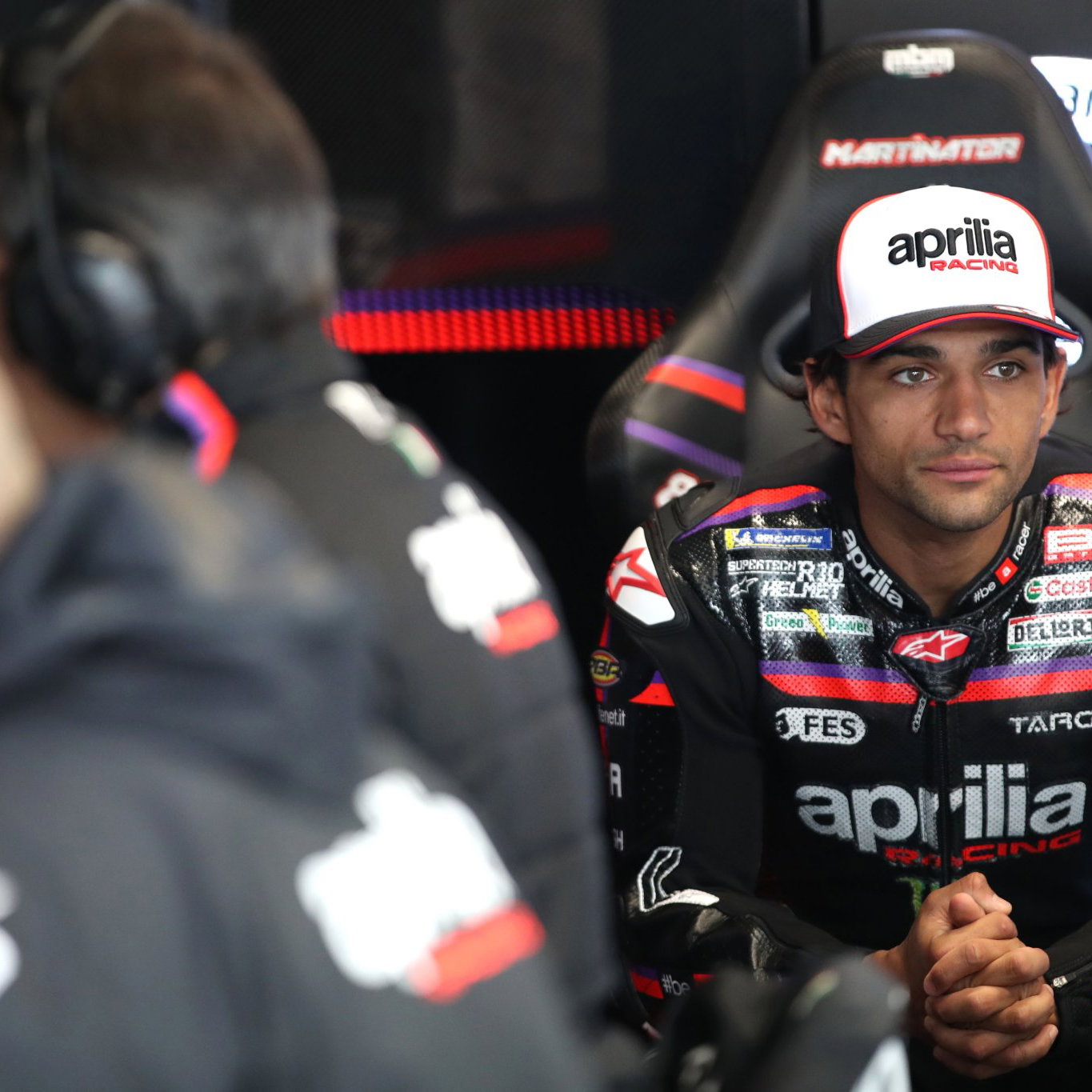
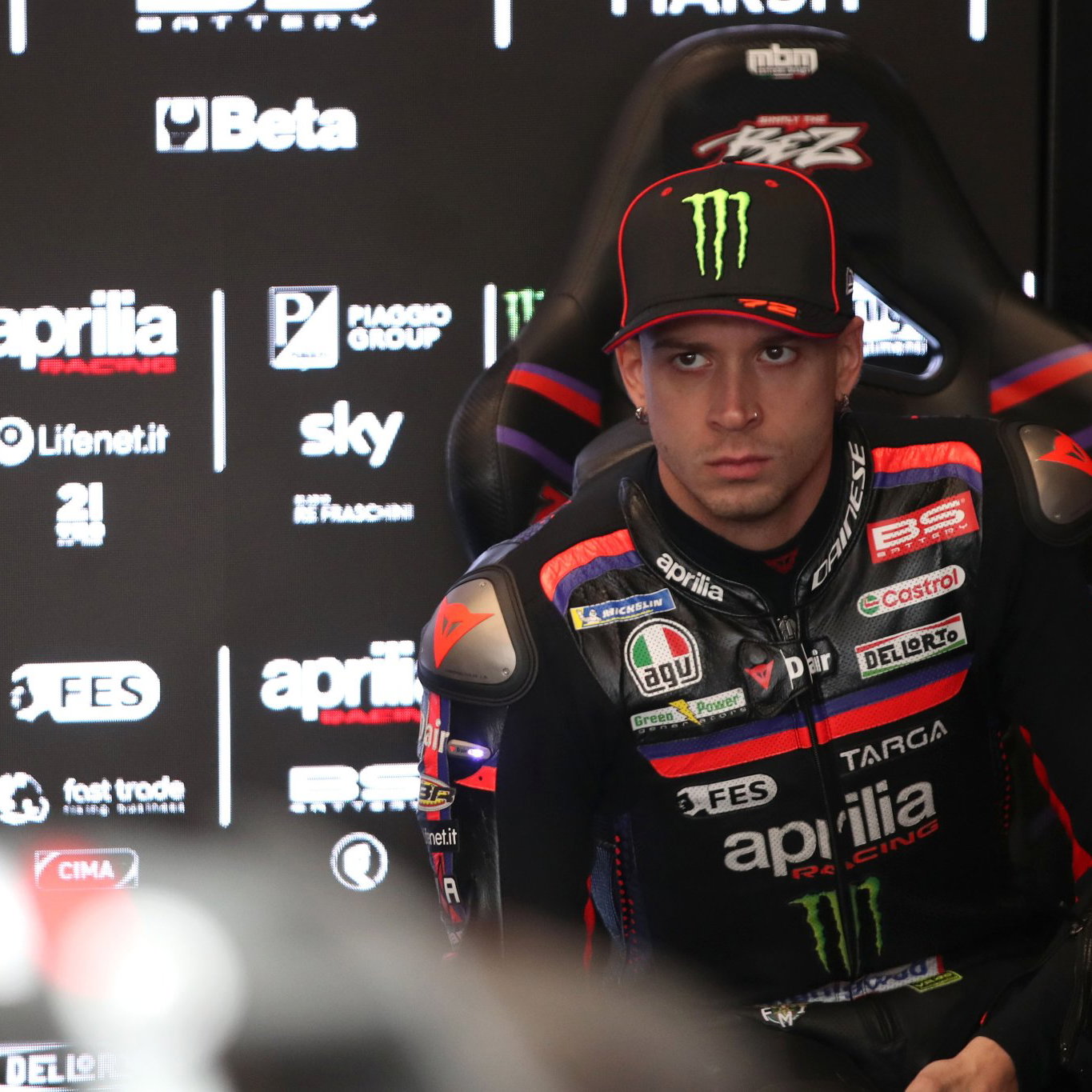
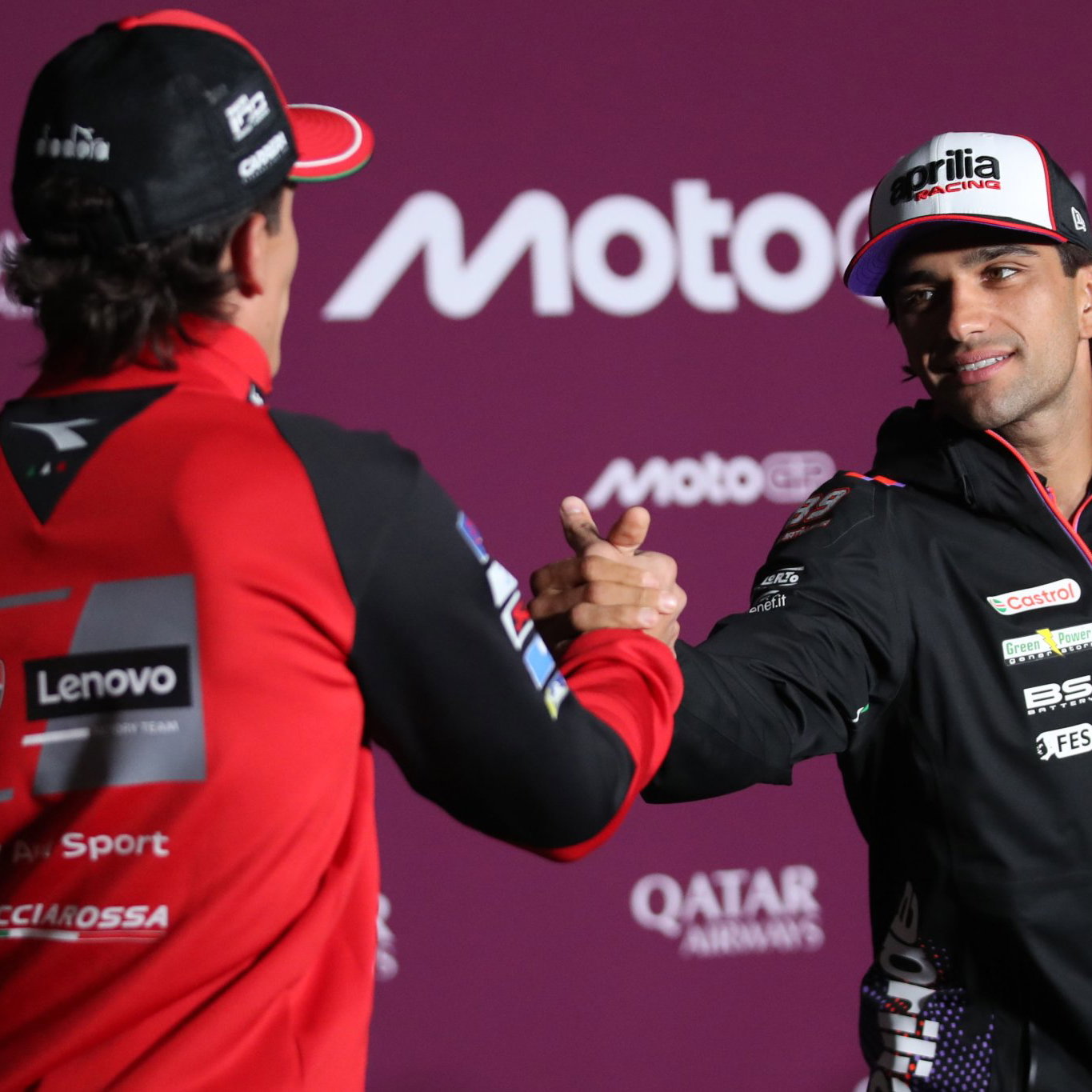
Aprilia CEO Massimo Rivola admits he is “a bit disappointed” that Aprilia couldn’t secure “a top title sponsor” for the 2026 MotoGP season off the back of its best year ever.
The Noale-based brand reached new heights in MotoGP in 2025, as it scored four grands prix victories across its two teams and finished runner-up in the constructors’ standings for the first time.
It also managed to break into the top three in the riders’ championship for the first time in history with Marco Bezzecchi, who emerged in the second half of the campaign as a regular threat to runaway title winner Marc Marquez.
All of this has positioned Aprilia as the brand to watch as the 2026 season approaches and the final year of the 1000cc regulations unfolds.
But it will attempt to fight for the world title against Ducati once more without a title sponsor on its RS-GPs.
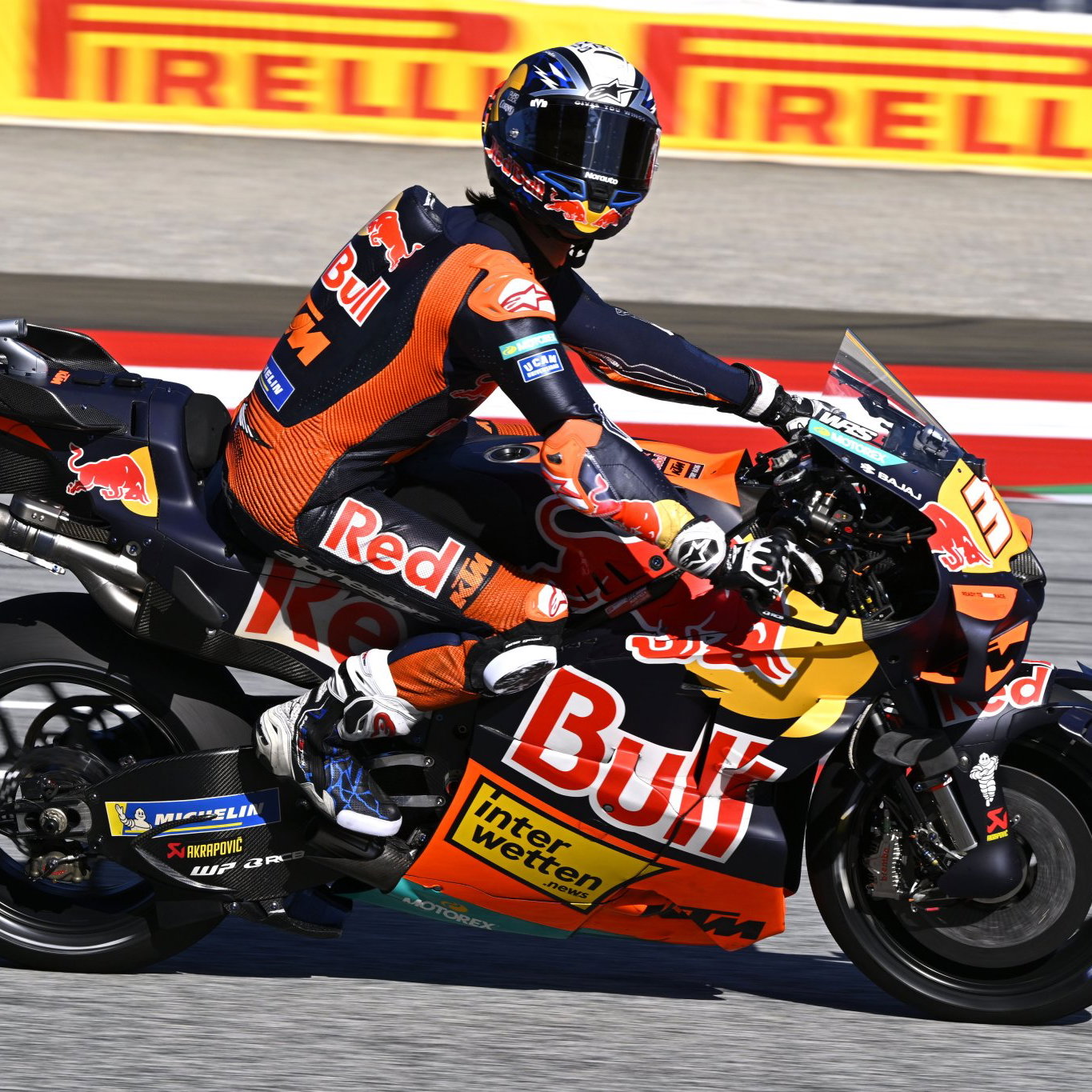
Aprilia has good backing from its owner, the Piaggi Group, but is the only factory team on the grid without a title partner. Ducati has Lenovo, KTM has Red Bull, Yamaha has Monster Energy, while Honda is now backed by Castrol following the end of its partnership with Repsol.
Speaking at Aprilia’s launch event on Thursday in Milan, CEO Massimo Rivola said it was a disappointment not to have gained a “top title sponsor” for 2026, suggesting that perhaps the outfit’s commercial ambitions were clouded by its results.
“The expectation is normally the thing that kills us,” he began. “We won the last two races, but then maybe we forgot that Marc Marquez was not there. I’m very curious to see Marco, because Marco is putting a lot of expectation on himself. So, we need to manage that. The expectation is high for the championship.
“I think when you start believing in a project, whatever direction it goes, you win so long as you share with your people.
“At the end, people make the difference. In the end, if our partners believe in what we do, I think we will continue to have as good sponsors as we have now. I honestly don’t want to say surprised, but I’m a bit disappointed that we didn’t achieve a top title sponsor.
“Luckily, we have the Piaggio Group, who saved us. But I’d love to one day call the [boss] and tell him we found 10 million for the budget.”

Aprilia’s sponsorship situation highlights lacklustre commercial value of MotoGP
Reading between the lines, Rivola clearly expected to be able to go to the market with a position of strength based on Aprilia’s results. Compared to what Ducati’s factory team did in 2025, though, scoring 13 grands prix wins and sweeping to all three titles, Aprilia’s year was a drop in the ocean.
However, Aprilia was also caged in by the current commercial interest MotoGP can command right now.
For all of the noise surrounding Liberty Media’s takeover of the championship and how it can replicate what it did with Formula 1 to boost the health of the series, that is not going to be an overnight process.
The hill Liberty has to climb to get MotoGP up into the realms of some of the world’s major sporting championships in terms of commercial value is steep. That was evident from the sale price it snatched MotoGP up, with Liberty putting down €4.2 billion. F1, as of January 2026, held market capitalisation of £16.91 billion, while its annual revenue in 2025 topped £3 billion.
There is clear interest from outside investors. A consortium led by ex-Haas Formula 1 team boss Guenther Steiner purchasing Tech3 is proof of that. However, Tech3 was bought for €20 million. Last year, Tech3 was the ninth-best team of the 11 on the grid.
By contrast, F1’s lowest valued team is Haas (who was eighth in the standings) at $1.5 billion, generating $150m in revenue, according to Forbes. Ferrari is the grid’s most valuable, despite limited success in recent times, at $6.5 billion, generating revenue of $670m.
Having worked in F1 with the likes of Ferrari, Rivola’s understanding of the commercial landscape in motorsport is deep. As far as he is concerned, all of the current brands in MotoGP need to work harder to be more attractive.
“There is a very long answer,” the Aprilia CEO replied when asked why MotoGP isn’t generating great commercial demand. “In short, I think as a result, the level of MotoGP brands - and I think they will do - didn’t make the step for Formula 1 brands.
“The investment made was massive in F1. I don’t think we have to do a copy and paste of what was done in F1. I think MotoGP has its characteristics and has to keep them. But in terms of brands, we all need to raise the level. Riders must be used as ambassadors to promote the show that is still the best in the world.”

MotoGP must increase its offering to commercial partners
Rivola’s point about riders being used as ambassadors is pertinent. One of Liberty’s biggest success stories with F1 was how it grew the series to a casual audience through Netflix’s Drive To Survive.
Now, whenever this example is given, it is important to caveat it with this: Liberty was dealt an incredibly lucky hand by the global COVID pandemic, which forced everyone indoors and led people to consume more new media than they might have done normally.
That said, Liberty’s presence of mind to have a product like that available in the first place shows just how important it viewed this project. MotoGP has tried to replicate this with its own version, which was limp and uninspiring.
The success of Drive To Survive wasn’t in the racing it showed, but the human element, which in turn made drivers and paddock personnel household names. Guenther Steiner was one of those success stories, so his involvement now in MotoGP will undoubtedly draw some new eyes to the championship.
Fundamentally, MotoGP has yet to figure out a way in which it can make its riders household names. Save for Valentino Rossi and Marc Marquez, the rest of the grid doesn’t tick many boxes for those outside of the MotoGP bubble. Dorna’s own social media content, which at present seems to just ape F1’s, isn’t doing a good enough job to change this.
What Drive To Survive has also helped F1 become is an aspirational brand. Fans of something don’t like hearing this, but it is the unfortunate reality of our society: the true fan isn’t the lifelong diehard - it’s the casual with plenty of disposable income willing to buy into whatever a brand is selling.
A quick glance at the sponsors on F1 cars versus those on MotoGP bikes shows why the latter isn’t the commercial juggernaut it can be. Even the current team launch period is proof of this: Aprilia held its at Sky’s Italian studios, which is no small brand, while new F1 team Cadillac’s 2026 livery will be unveiled during the Super Bowl.
Changes to the paddock, for better of for worse, are in the works. A new VIP area was set up at races in the second half of last year, while MotoGP teams are set to have bigger garage spaces at the expense of Moto2 and Moto3 outfits being housed elsewhere.
Now, MotoGP has to be careful not to tread too much on all of its history. But, as Rivola points out, bigger garage space is something MotoGP teams need for their sponsors. At Misano last year, I was fortunate enough to be invited into the Ducati garage for the sprint by Lenovo - one of the grid’s few genuinely significant major sponsors. The viewing areas, however, aren’t exactly big, certainly compared to what F1 teams can do for their dignitaries.
“We are speaking to Dorna about when it’s possible to get more space in the garage to get a better layout, to give our sponsors a better view,” Rivola explained.
“But I think it’s a work in progress. Maybe 2027 will be a way to get everything new not just in terms of bikes and tyres, but also the paddock. I don’t know. For sure, Dorna started in the last months to push the direction to make MotoGP get more and more value as a brand. Obviously, the paddock is the main corner of that.”

Sponsorship critical in MotoGP maintaining punishing calendar schedule
As any business grows, it has to reach new people and markets. MotoGP’s calendar last year stretched to 22 rounds, the longest in its history. On top of that, there are sprints at every event, bringing the total number of races up to 44.
Forty-four races, spread over 22 weekends from the end of February to mid-November, as well as two pre-season tests, several in-season test days and private testing if you’re a concession team, is a huge toll on everyone involved.
In a lot of ways, MotoGP has bitten off more than it can chew with this calendar format. Last year, only two events saw the entire full-time grid present. Injuries, coupled with the brutal schedule, make it almost impossible now for a season to go by without multiple replacement riders being needed at every round.
The risk of injury in MotoGP is greater than in F1, and that will always be unavoidable. Still, using riders as ambassadors is difficult when they’re sidelined for multiple races.
Given F1’s calendar growth, Rivola doesn’t see that being any different for MotoGP under Liberty. But where F1 and MotoGP diverge is the ability for teams in the latter to have rotating teams of mechanics to ease the load on personnel. Though MotoGP track operations are smaller, the revenue isn’t there right now for teams to be able to afford essentially an extra crew per rider.
“It would be nice to have less than [22 rounds],” he said. “I don’t think we will have less than that, especially with Liberty coming, because obviously, the show is the thing that pays. As long as we raise the level of the business, I think we can cover 22 races with the number of tests we are doing right now.
“Maybe a solution could be to reduce dramatically the testing. The reason I say that is that in Formula 1, they’ve started to get more mechanics, more engineers and rotating them. Maybe people like me and Fabiano [Strelacchini] would have some problems, but at least we’d have problems for two people and not everybody. But we need to raise the level of the business in MotoGP, and then the solution will, I don’t want to say easy, but it will come.
“Incomes, absolutely [is what we need for this]. Sponsors. As long as a top sponsor joins MotoGP, we will get a benefit as MotoGP as a brand.”
Tags: