Pirelli explains private testing strategy for 850cc MotoGP tyres - Exclusive
Pirelli explains why its MotoGP tyre development has shifted away from group tests and towards private 850cc outings.

Pirelli has outlined why its 850cc MotoGP tyre development programme has shifted away from group tests and towards supporting manufacturers’ private testing activities.
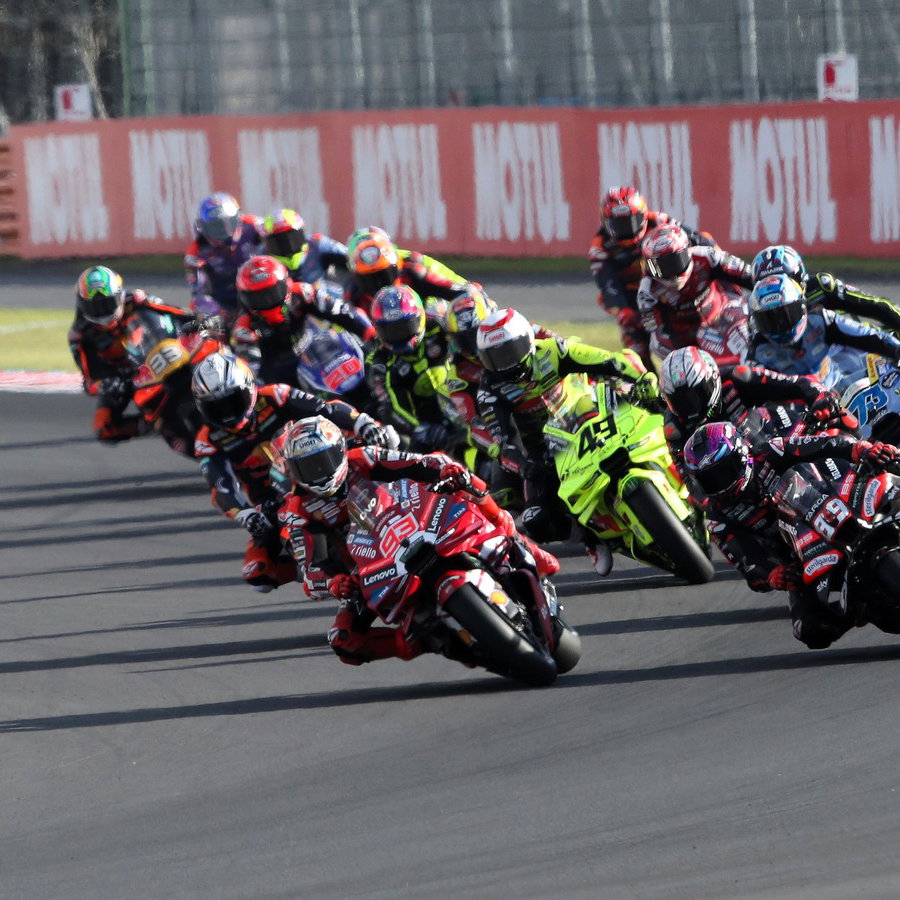
After making its MotoGP debut with a multi-manufacturer test at Misano in September, Pirelli had been expected to hold a second group outing following the Valencia season finale.
However, with the Misano test - on the soon to be extinct 1000cc machines - judged a success, Pirelli opted to wait for manufacturers to bring track-ready 2027-spec 850cc prototypes.
With each factory working to a different timeline, organising another collective test was deemed impractical.
“It’s a strange start actually, because you haven't got a bike!” Pirelli Motorcycle Racing director Giorgio Barbier told Crash.net of the initial test on 1000cc machines.
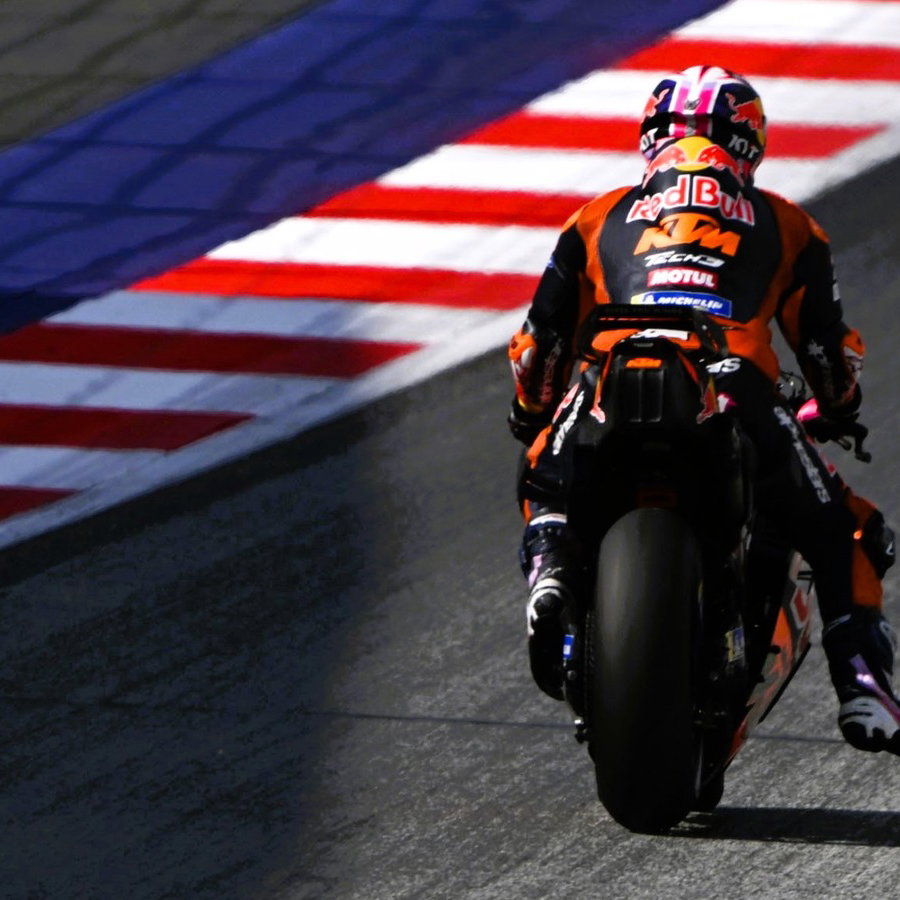
Barbier was speaking before KTM became the first manufacturer to put an 850cc bike on track, at Jerez earlier this month. Honda then made a behind-closed-doors debut of its future MotoGP bike at Sepang last week.
It is still unclear when an 850cc Ducati, Aprilia or Yamaha will take to the track, but some manufacturers have suggested it could be several months away.

Misano test “quite good, quite interesting”
“The fact is, we would like to start as early as possible to prepare for the 2027 season, but the bikes are not there yet,” continued Barbier, speaking at the Valencia finale.
“So the speed of [850cc] development by the different manufacturers will be important. We will have to attend to this and follow this process with them.
“Our first job was to create a casing around the same rim size they are using now, which is different from what we are used to. So, 4-inch front, 6.5-inch on the back, while we currently use 3.5 and 6.
“Then we needed a test. So we asked Dorna, MSMA, the teams, and Michelin to allow us to test the present bikes to have an idea of what is working.
“They came to Misano, two days after the race, which was perfect - not with the ambition to make any comparison, but for the same conditions.
“We got just one day, so there was not a lot of time to make setup changes on the bikes.
“Our worry was that these bikes are a result of eleven years of a competitor’s tyres. And we know that our tyres are different from theirs. So, maybe we put the tyres on and nothing is good!”
Although lap times remain a closely guarded secret, Barbier said the outcome exceeded expectations.
“Actually, the test was quite good, quite interesting. The work the teams and riders did was fantastic for us. We were lucky with the weather. So, everything worked perfectly.”
As a result, Pirelli cancelled plans for a Valencia follow-up test, again on 1000cc bikes, instead committing to supplying reference tyres for manufacturer test teams.
“The manufacturer test teams are now preparing a calendar for us with all the tests and circuits they will decide to use. And we will follow all the [private] tests with them, in order to be well prepared for the next Valencia [post-season test in 2026].”

"A process we have to go through, like in Moto2"
Barbier acknowledged the ‘chicken-and-egg’ nature of developing new bikes and tyres simultaneously, stressing collaboration would be key.
Should manufacturers want more Pirelli data before committing to an 850cc design, the Italian company is happy to provide its tyres for more 1000cc running, “But as soon as you are ready with the 850, it will be better.
“We understand they might have to create completely new chassis, engine and electronics, with tyres different from what they are used to. And so, let's work together.
“I’ll give you an example. In Moto2, at the beginning of last year, the teams had a problem with tyre wear and so on. But now we are racing with compounds two [grades] softer than we started with!
“That’s because the Moto2 teams have learned how to use and get the best from the tyres. And this is a process we have to go through with the MotoGP teams.”
The main advantage of backing private tests rather than group outings is that Pirelli can gather data on a wider range of circuits.
“It all depends on the tracks the teams will choose,” Barbier said, when asked how much the Misano spec tyres will be modified for upcoming tests.
“We know we will have four, five or six tracks [nominated for private testing] that we have to go to.
“So, we can adapt our compounds or casing for the characteristics of each, not to specialise too much for every single place, but to give the best possibility to run and develop the bike.
“And, at the same time, we will accumulate experience on these different tracks.”

Each manufacturer can nominate up to three current Grand Prix circuits for private testing. However, due to its D concession ranking, Yamaha can hold tests at any GP venue, as long as it's over 14 days before an event.
Popular test venues include Jerez, Misano and Aragon, with the Japanese factories also using Sepang and Motegi.
“Whenever a manufacturer is ready for a private test, they will call us,” Barbier said.
“If the manufacturers agree to share the cost of a race track, then some or all of them might test together. If not, we will follow them wherever they want to go individually.
“Perhaps, especially the Japanese, will look to do something in [Asia] during the winter, while [2026] testing might start a little bit later in Europe.
“But we are open to wherever they want to go.”

Peter has been in the paddock for 20 years and has seen Valentino Rossi come and go. He is at the forefront of the Suzuki exit story and Marc Marquez’s injury issues.