Ride 6 Review: Can Casey Stoner revive motorcycling’s Gran Turismo?
Can the inclusion of Casey Stoner and other real life racers breathe fresh life into Ride 6?

The sixth entry in Milestone’s Ride series, Ride 6, brings a whole new look to the decade-old franchise, but does that equate to any material changes?
Ride 6’s biggest change compared to previous entries in the series – the first of which was released back in 2014 – is the introduction of ‘Ride Fest’ as the central focus of the single player part of the game.
Clearly inspired by the ‘Horizon Festival’ in Forza Horizon, the point of Ride Fest is to try to create structure in the career mode and a sense of being a part of a virtual cultural movement of motorcycling.
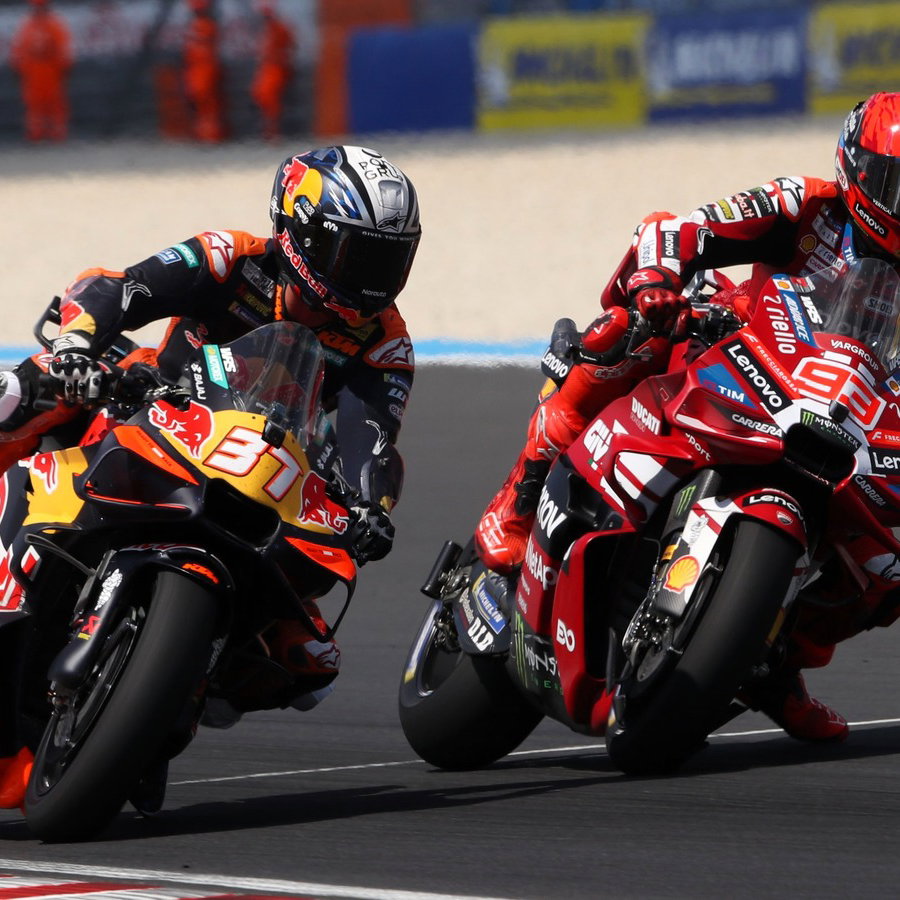
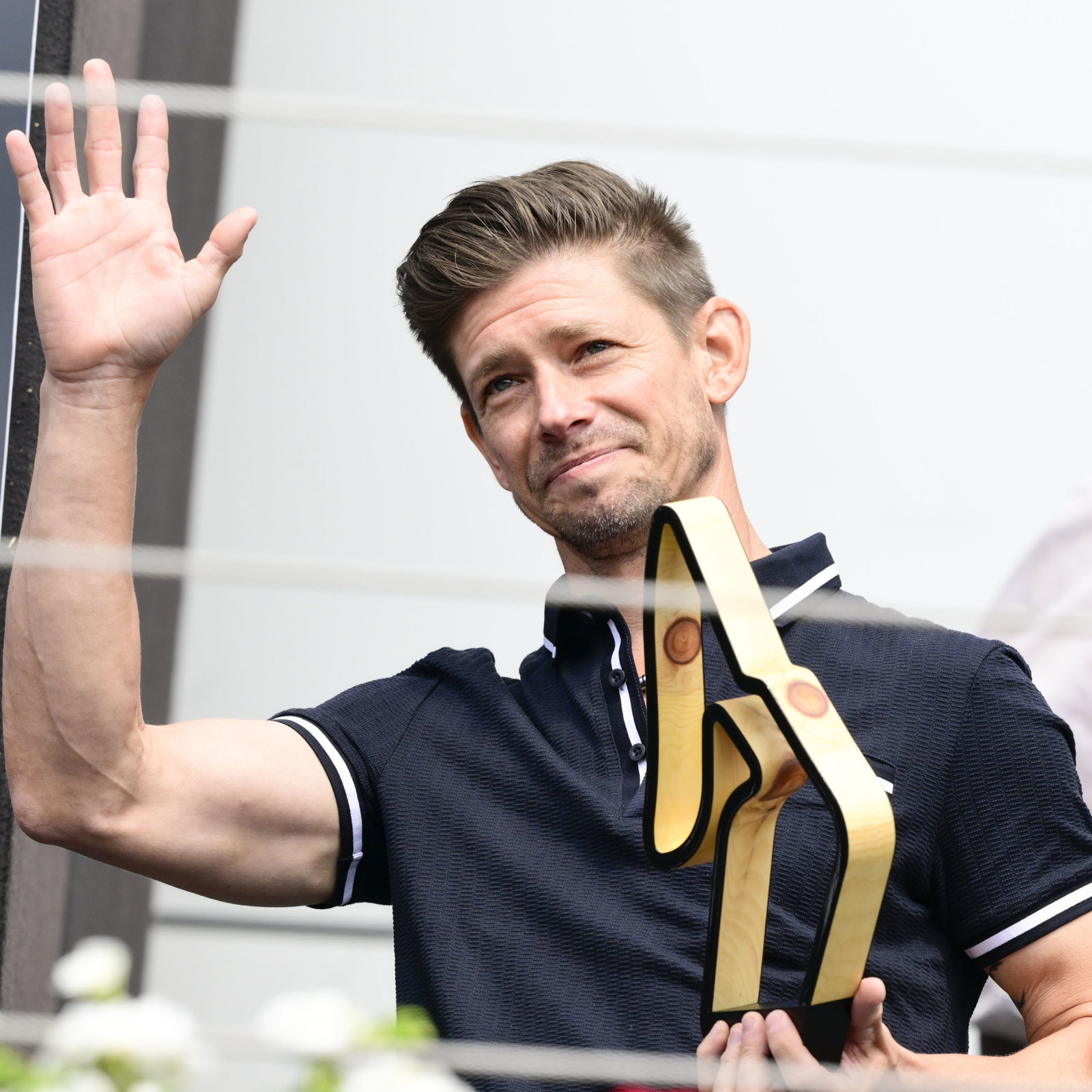
As the player, you compete within Ride Fest with the ambition of beating several iconic riders – including road racer Peter Hickman, MotoGP champion Casey Stoner, and Dakar star Skyler Howes – as you progress through the various events.

At the time of writing this review, I haven’t reached the end of the career mode events list, but I have completed one of the first chapters that puts you up against one of the game’s real world riders, namely Tyler O’Hara of MotoAmerica King of the Baggers fame.
My impression of that was fairly underwhelming, partly because O’Hara’s in-game character was not drastically faster than the rest of the AI, partly because his on-track AI crashed in most of the races, and also because there wasn’t much build-up to the races against him outside of the track that made it feel significant. It kind of just felt like another race.
And, in general, that’s my impression of Ride Fest, which honestly feels like it makes more of an impact on the look of the game menus than it does to the actual experience of playing the game. Overall it feels like a Ride game: load into a race, finish it in five minutes, load back into the menus, and repeat.
There just isn’t the feeling that Ride Fest exists as anything much more than a re-skin, at least in the first part of the career mode, and that’s a bit disappointing considering how central it was in how the game was presented after its announcement late last year.
Part of the reason Horizon Festival works in Forza is because of the game’s open-world element that, in places, helps to make it feel like Horizon Festival is an actual part of the world the game is putting you in. So, not to revert to gaming cliches, but the implementation of Ride Fest is just lacking in immersion in comparison to the four-wheeled equivalent it was clearly based on.
It almost feels like an implementation of a PGR4-like world tour system would work better.
There are three regions in the game: Americas, Europe, and Asia/Africa. Cycling through those regions on a seasonal basis could at least give an impression of progression that seems to be missing when you hop from Okayama to Daytona and back again within about 15 minutes’ real-time. Then you could have a kind of ‘world finals’ event at the end of the season with qualification determined by results in the tour part of the season to give that kind of end goal to reach in the game.

Additionally, it’s possible that the bike roster is not the most geared towards creating a feeling of progression. Sure, there are scooters and twin-cylinder bikes you’ll find in World Sportsbike this year at the low end of the scale, but the absence of two-stroke 125cc bikes and even the 300-class machines that were there in Ride 4, for example, feels like missing a block at the bottom of the pyramid.
That said, the inclusion of adventure bikes and maxi scooters as off-road options is a clear win in Ride 6. Sure, it would be nice if there were more tracks or even some point-to-point stages, and the physics do feel a bit limiting on dirt. But the growing prominence of adventure bikes in real world motorcycling definitely warrants their inclusion in a game like this.
It’s certainly not a perfect implementation of off-road racing, but it’s a reasonable attempt at it and clearly builds on what Milestone did with MotoGP 25’s flat track mode. And, again, it’s an effort to include a style of motorcycle that has been completely absent from Ride in the past.
If the physics feel a bit limiting on dirt, they feel much better on asphalt – to be expected, probably. It maybe doesn’t feel as good as Ride 4, but better than the vibration-less Ride 5.
There are a lot of electronic assists to flick through and tune on the bike: ABS, traction control, engine brake, anti-wheelie, and power mode. Each has five levels of intrusiveness from 0 to 4, apart from the power mode setting that has ‘wet’, ‘eco’, and ‘full’ modes.
Personally, I’ve been using ABS on 2, since it just makes braking a bit more consistent; the front tyre tends to lock quite suddenly when trail braking with no ABS, which is something you could get used to, for sure, but for the purpose for getting through these three-lap races and time trials with some kind of time efficiency, a little bit of ABS was helpful.

One thing that could maybe be improved about the electronic assists is being able to change them before the start – no anti-wheelie on the start is a ticket to the back of the pack, but once you’ve got going you generally don’t need it, especially on the lower-powered bikes. The only solution to this at the minute is to remember to change your anti-wheelie setting before the end of a race so it’s set ready for the start of the next one.
Of course, the quality of single player racing is determined by two things: physics and AI. While the physics are reasonably fine, if not especially exciting, the AI are not as good.
It’s been more or less the case since Milestone started using machine learning for its AI in MotoGP 19 that the AI in the Italian studio’s games have been often over-aggressive, unrealistic and unoptimised in its line-choices, and not that competitive against the faster players. For my time so far on Ride 6 I’ve just stuck the difficulty on 100 per cent and gone with it – sometimes I won, sometimes I didn’t, sometimes (especially on the dirt) I took a few attempts to achieve the main and bonus objectives for each event. So, the AI is reasonably competitive, at least for me, coming to the game mostly from playing MotoGP 20 in recent weeks and months.
But the quality of the AI that will not create a different opinion player-to-player is its competence when going wheel-to-wheel, which I found to be not fantastic. If you make a pass on the inside, the AI just turns in as normal, hits your back wheel, and you crash. There’s really not a safe way to pass the AI on Ride 6 in my experience – apart from being clean faster in the straights, which isn't very fun.
Finally, while there is additional content in the form of adventure bikes and dirt tracks, and a new Japanese road racing track in Gunma Mountain, there is also a lot that feels missing and some of it has been missing for a while by now.

For a start, it seems bizarre that with each game the selection of riding styles for your rider gets smaller. There are only three to choose from on Ride 6 and this is in the sixth edition of a series that began with its first two entries having a riding style editor.
There are also circuits that are missing from previous editions, like Phillip Island and Interlagos, or even going back to the city circuits in Miami (admittedly, not a great one) and Milan, and the North Wales road racing track that was in the first two games and which, for me, is still the best fictional circuit that Milestone has come up with.
Also, some of the content that is new is essentially pointless, particularly in the bike customisation. For example, you can have a Wiseco piston or a Vertex piston, but they don’t have different performance characteristics. It’s just a brand logo on a menu.
Perhaps the most substantial change in the way the game works, aside from the addition of dirt racing, is the introduction of a Gran Turismo 7-style rotation system of old bikes in the used bike store. The problem is that there are five bikes available and they only rotate on a weekly basis; it’s quite possible to generate enough money by doing races within a few hours of gameplay that this cycle period just doesn’t seem fast enough.
In summary, Ride 6 is an entry into Milestone’s second-longest-running series that tries to make itself different to its predecessors with a new look and some new content. But some misses on execution mean it feels incredibly indistinct compared to the last few entries.
Tags:

Alex joined the Crash.net team in August of 2024 having covered consumer and racing motorcycle news at Visordown for two years.