No Kimi Antonelli track limits penalty leaves more questions than answers
Kimi Antonelli's lack of penalty at the Singapore Grand Prix despite four apparent track limits violations raised question marks.

Eyebrows were raised after Formula 1 championship leader Andrea Kimi Antonelli avoided a penalty despite picking up four track limits violations during the Singapore Grand Prix.
In F1’s rules, each driver is allowed three track limits transgressions before they are shown a black and white flag.
This acts as a warning to drivers that their fourth infraction will result in a penalty. Four breaches trigger a five-second time penalty, while a fifth will see a driver be handed a 10-second penalty.
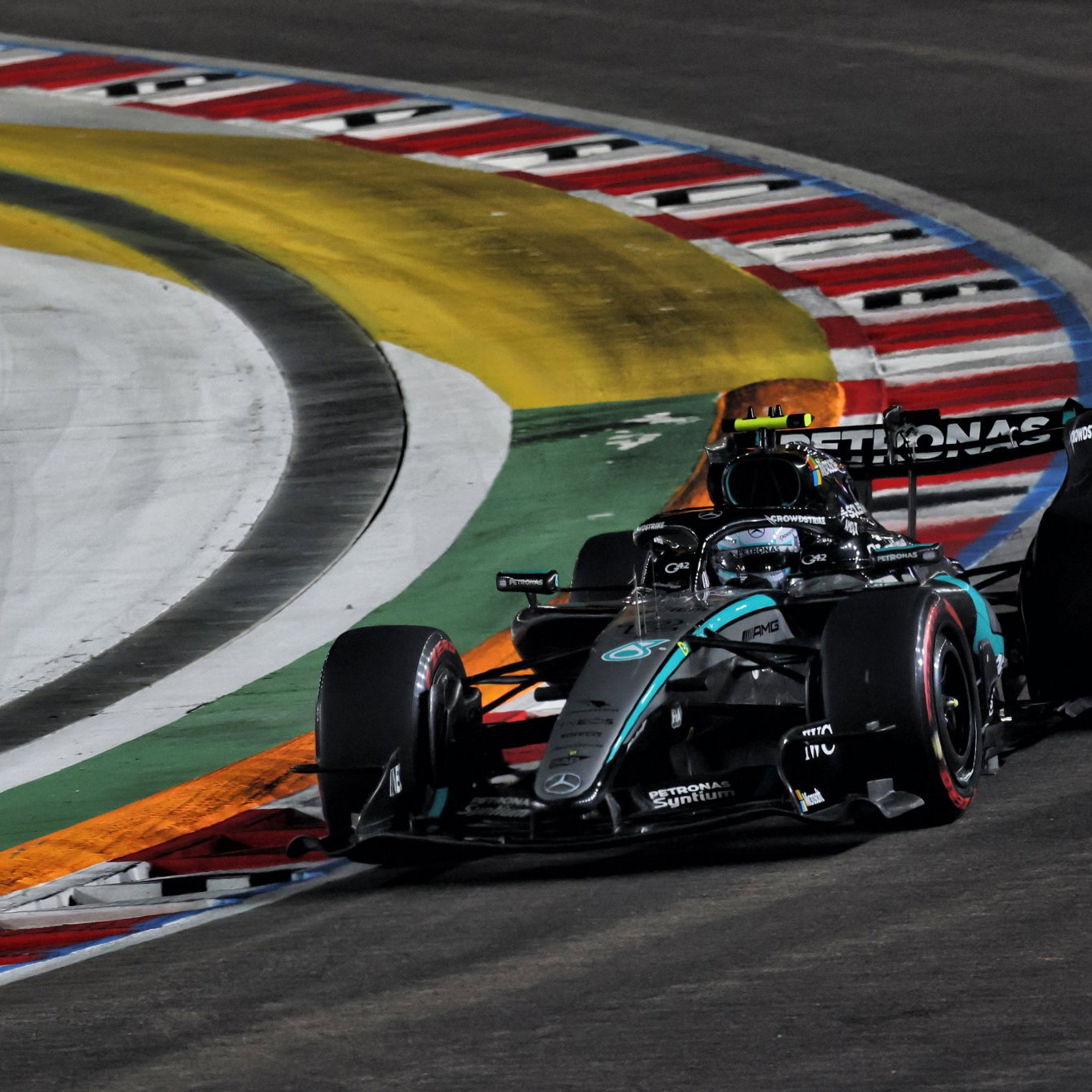
Antonelli was pinged a total of four times during Sunday’s 62-lap race at Marina Bay. Two violations came at Turn 2, one at Turn 19, and his final one was at Turn 7.

Despite this, Antonelli was not penalised, leaving many onlookers confused and questioning why no action was taken against the runaway F1 points leader.
Some reports have claimed that the stewards revoked one of the violations after it was contested by Mercedes, but the Silver Arrows denied this when it was put to the team by Crash.net.
Crash.net has reached out to F1’s governing body the FIA seeking an explanation as to why no penalty was issued but is yet to receive a response.
It appears that Antonelli was spared a penalty because the Italian driver was suffering from braking problems in his W17.
Article B1.8.5 in the 2026 F1 regulations states that: "Drivers must make every reasonable effort to use the track at all times and may not leave the track without a justifiable reason.”

The FIA seemingly did not ping Antonelli due to him leaving the track once as a direct result of his brake going long and determined he gained no advantage by going off track.
It is important to note that even if Antonelli had been issued with a five-second penalty, it would not have changed his finishing position of third, because McLaren’s Lando Norris came home 16 seconds behind the Mercedes driver.
But the lack of penalty does raise some questions over potential inconsistencies about how track limits are regulated, as well as a lack of transparency in this particular scenario.
At last year’s Singapore Grand Prix, Lewis Hamilton was given a five-second penalty for exceeding track limits “multiple” times during the last laps of the race after his front brakes failed.
Hamilton managed to nurse his car home in seventh, but the penalty dropped him to eighth behind Fernando Alonso.

"During the hearing, the driver confirmed that he left the track at several occasions. He was trying to manage a brakes issue situation,” the stewards said last year.
"This being said, after further investigation, and in accordance with the list of exemptions foreseen in the Driving Standards Guidelines, the Stewards considered that this was not a justifiable reason and apply the usual penalty for such type of infringement. This was not contested by the team representative nor the driver.”
Coincidentally, Antonelli also found himself on the receiving end of the same penalty at this year’s British Grand Prix when he ran off track while experiencing handling issues, which was eventually diagnosed as a broken front-left wheel shield.
In both the aforementioned examples of Antonelli and Hamilton, the stewards deemed the car issues were not “justifiable” reasons for the track limits violations.
"It was evident that Car 12 left the track at Turn 6 on Lap 44 without a justifiable reason. This was the driver's fourth track limits infringement of the race,” the stewards wrote at the time of Antonelli’s Silverstone penalty, which dropped him from ninth down to 16th.
"The Stewards accepted that Car 12 was experiencing a mechanical issue. However, that did not amount to a justifiable reason for leaving the track. In accordance with the Penalty Guidelines, the standard penalty for a fourth track limits infringement during the race is a 5 second time penalty. The Stewards therefore imposed the standard penalty.”
This is clearly a murky area in the regulations where discrepancies have the potential to open up a can of worms. On this occasion, it made no difference to the result, but a similar situation in the future could prove more contentious.

Lewis regularly attends Grands Prix for Crash.net around the world. Often reporting on the action from the ground, Lewis tells the stories of the people who matter in the sport.