Why MotoGP penalties are never "an eye for an eye"
Simon Crafar explains why MotoGP Stewards assess mistakes, intent and danger rather than "an eye for an eye”.

Separating a rider’s mistake from the resulting consequences is always a hot topic when it comes to MotoGP penalties.
In other words, should a minor error that results in injury to an innocent rider be punished more heavily than a bigger mistake that, fortunately, affects nobody else?
Or, if an innocent rider loses 30-seconds in an incident, should the ‘guilty’ rider lose at least the same amount of time?
In MotoGP, the Stewards operate according to a clear principle: Penalties cannot be “an eye for an eye”.
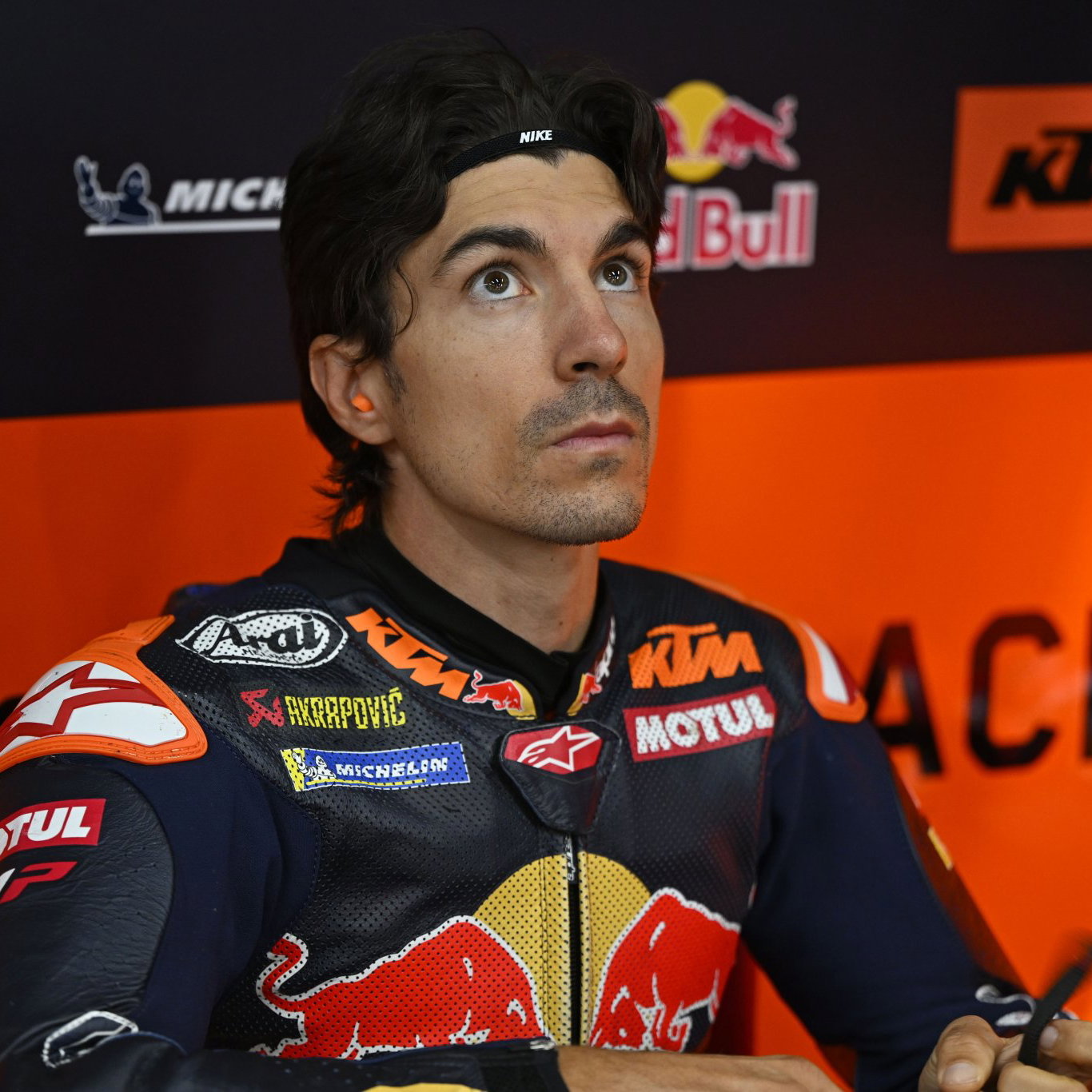
Speaking on the latest edition of the Crash.net MotoGP podcast, Simon Crafar, chairman of the FIM MotoGP Stewards, explained:
“That's a really important one. The penalties are never an eye for an eye. Just because someone's ruined someone else's race, we don't go out to ruin their race.
“Incidents on the opening lap we judge harder because you can put multiple riders in danger.
“But if it's a legitimate overtaking attempt that goes wrong and you put someone down, it's a long lap penalty as a first offence, because everyone could do it.
“A long lap is not that much. It adds two or three seconds to a person's lap. But the penalty is to acknowledge you've done something wrong, and don't do it again, or we'll penalise you more harshly.

“It's not about the consequence, beyond what we define as ‘causing a crash’.
“There are several aspects to it but, firstly, we can't wait for the doctor's report and then adjust the penalty to suit.
“We're purely looking at the action itself. How big a mistake it was, how bad were the intentions and how dangerous it was.
“We can't look at how another rider is injured, because that is luck, and the brutal side of our sport.
“Secondly, I want to get across that often our job is not just to penalise, but it's also sometimes to defend [a rider] because of this.
“In other words, someone will want someone else to be punished more harshly.
“Let’s make up an example. Imagine ‘your’ rider is involved in an accident while they’re fighting with somebody.
“It's judged by us as a race incident, meaning nobody did anything wrong or bad, they've both gone for the same piece of track - basically something's happened and we deem it's not a punishable offence.
“However, your rider ends up badly injured because of it. So there's a lot of angry people, and I understand why.
“But in that scenario, it's our job to defend the other rider involved, who probably feels pretty bad, and from our perspective they were just racing.
“It was a race incident. They didn't do anything seriously wrong; it's just a horrible consequence that the other rider is injured.”

Warnings before penalties
Crafar, winner of the 1998 British 500cc Grand Prix and a multiple WorldSBK podium finisher before working for Ohlins, starting his own track day school and becoming a MotoGP pit lane reporter, added that much of the Stewards’ work takes place behind the scenes.
That includes privately warning riders before their behaviour crosses the line into a punishable offence.
“The main goal is to make the racing as safe and as fair as I can.
“It's never going to be completely safe or fair, but what I try to do is chase up everything we see and communicate with the riders and teams.
“If I see something that's not punishable but not completely safe or fair, I’ll get the video, send it to their team manager and say, "Please talk to them about this...".
“If it's quite bad, or they've done it more than once, I’ll also bring them up and show them.
“If you don't do that, the rider thinks they've got away with it, and they're going to continue doing it.
“I end up spending more time on that kind of communication, saying, "Please don't do that, or it'll end up as a penalty." And that's what I think ultimately prevents a lot of penalties.
“Because you've already warned them, they know you're watching, and nine times out of ten, they’ll stop doing it. Or at least they're not surprised when they are penalised.”
When a crash can reduce the penalty
One situation where the normal first-offence, second-offence penalty escalation might not apply is when the offending rider effectively penalises himself by crashing.
“If the rider himself has crashed during what would be a second offence, a single long lap penalty might be enough in that situation.
“But if they just knock another rider off and continue on their way, they will deserve the double long lap.”
Watch the full interview with Simon Crafar on YouTube here...
Tags:

Peter has been in the paddock for 20 years and has seen Valentino Rossi come and go. He is at the forefront of the Suzuki exit story and Marc Marquez’s injury issues.