“Extreme snapping”: Why MotoGP needed Stability control - Exclusive
MotoGP’s Director of Technology Corrado Cecchinelli explains how Stability control reduces highsides - and why Traction control was not enough.

MotoGP’s Director of Technology Corrado Cecchinelli says data shows the sport’s new Stability control system is doing exactly what it was designed to do.
Introduced midway through last season within the standard ECU, Stability control, also known as slide control, aims to reduce a specific type of highside.
That doesn’t mean every intervention actually prevents a crash, but Cecchinelli is confident the system is reducing risk.
“What I can say as a general comment is that the manufacturers are happy to have it,” Cecchinelli told Crash.net.
“Everybody's using it, and I have seen data showing that it works. By which I mean, it is actually doing something and not just ‘hidden’ in the software.
“However, that also doesn’t mean that without Stability control, the rider would definitely crash in a situation where Stability control intervenes. That’s impossible to know.
“So, is it saving lives at the moment? I don't know. I would say it’s hard to see that it could be less safe than before. I would assume that it makes between zero and some difference on reducing crashes, but it can't make things worse.”
"Slides without spinning”
Since MotoGP already had Traction control, why did it need Stability control as well?
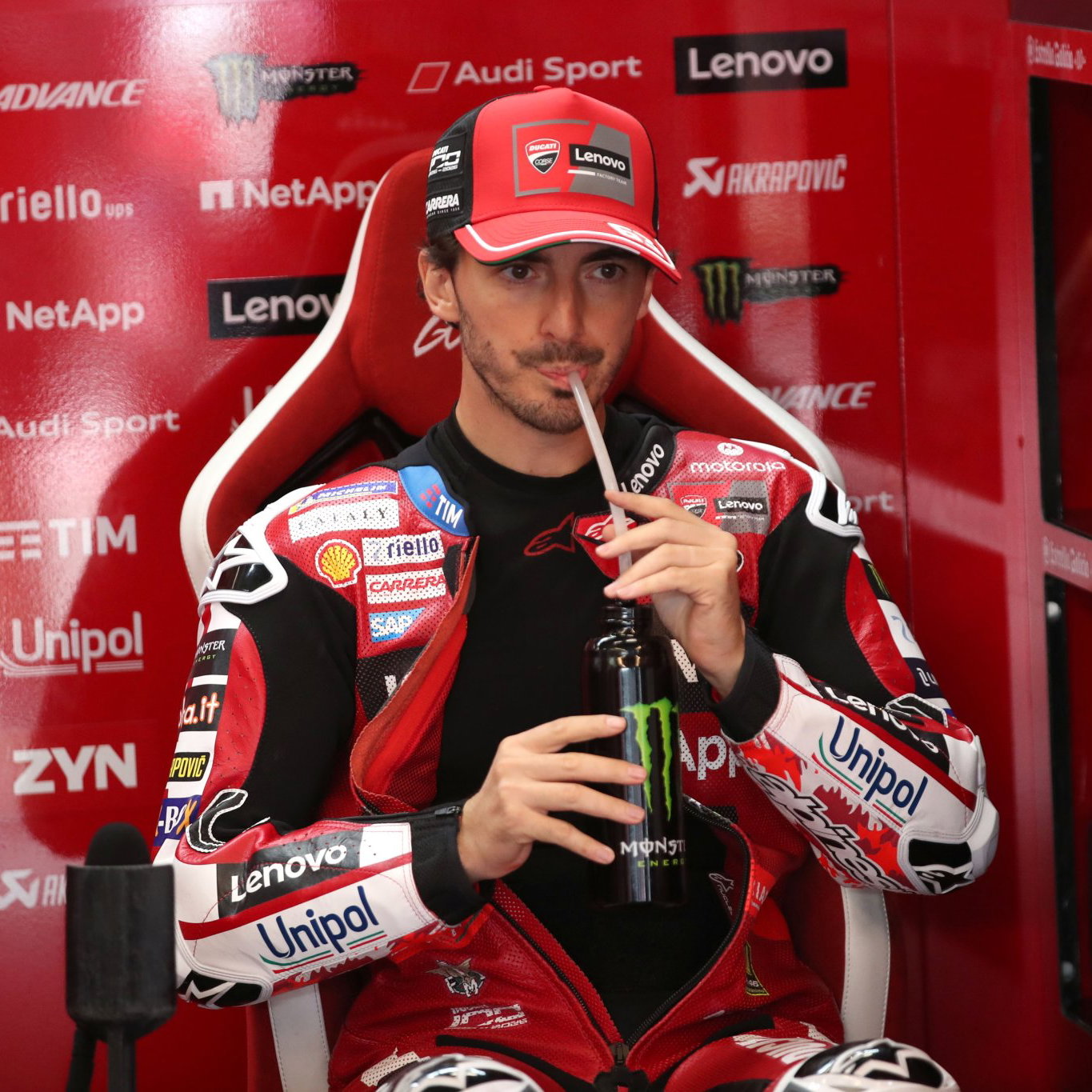
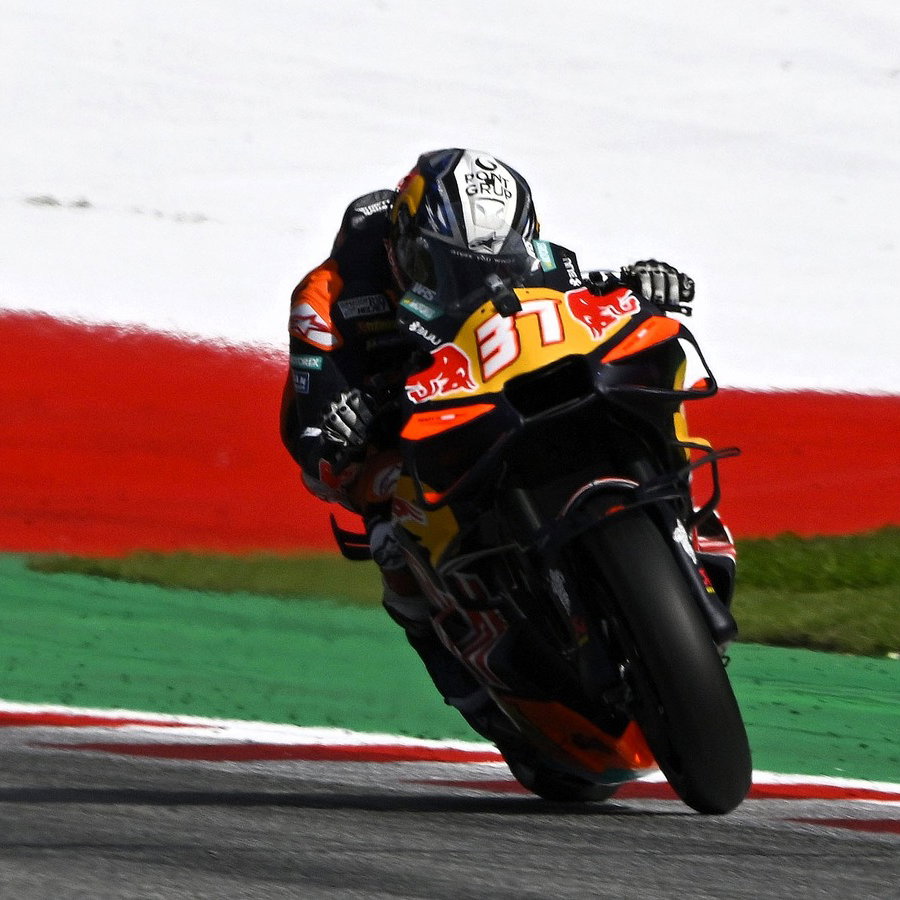
Stability control was developed to counter the kind of violent highside suffered by Francesco Bagnaia at the start of the 2023 Barcelona round.
The Italian’s Ducati suddenly snapped sideways while leading on the exit of the first chicane, throwing him down the track (see video above, set to start at the moment Bagnaia lost control).
He was lucky to escape serious injuries when his legs were run over in the mayhem that followed.
Crash.net asked Cecchinelli to explain a ‘textbook scenario’, where Stability control steps in, while Traction control would not.
“First of all, they address different phenomena,” Cecchinelli began.
“Traction control controls spinning. Stability control, otherwise known as slide control, controls sliding. So they are two different phenomena, despite the fact that they often happen together, but this is by chance.
“Normally, when you have an excessive amount of spin, you also break traction, which results in sliding.
“But sometimes - and Pecco’s infamous crash in Barcelona is a good example - we have seen cases of big slides without spinning. And this is what we want to control using Stability control.
“So, to answer your question, traction control, to make it simple, intervenes when it detects too much rotational speed of the rear wheel compared to the front wheel.
“What if the bike wheelies? Then you forget about the front wheel speed and use a hypothetical speed. But this is a detail.
“The overall concept is you compare the rear tyre rotation with the bike’s speed. But the aim is never ‘zero spin’ because a tyre can only push forward if there is some level of spin.
“So, there is an optimal amount of spin for accelerating the bike, and an excessive amount of spin that you want to control.
“Every tyre has an ideal amount of spin for maximising acceleration which actively changes depending on a number of factors such as lean angle, temperature, and so on.
“Then the part everyone forgets is that the same is true for braking: You need a negative wheel spin to generate the maximum braking force. So if you measure the number of revolutions of a wheel during braking, you will find the wheel was ‘slower’ than the bike.
“So, the target spin is not zero and traction control allows you, in principle, to always have your ideal spin percentage. It may be between 10 and 20 percent. Something like that."

“Extreme snapping”
Stability control is fundamentally different and more complex.
“Stability control controls what we call the yaw rate, which is the angular velocity at which the bike rotates around its vertical axle. So it’s not about how ‘sideways’ a bike is, but the rate at which the angle is changing.
"In other words, it should control when a bike ‘snaps’ sideways quickly.
“This is even more complex than traction control but, if you put the correct numbers for your bike into the system, it does exactly that. It controls extreme snapping in the same way that traction control controls extreme spinning.”
All electronic control strategies ultimately request one outcome: torque reduction.
“Each of these strategies, also including Wheelie control, do nothing more than ask for a torque reduction to a torque controller.
“So you put all of these strategies together - traction, stability and wheelie control - the strongest one at that moment prevails, and you cut the engine torque by a specified amount.
“The end result is always cutting of the engine torque.”

So they often work at the same time?
“Yes. But, regardless of the combination of messages sent from these controls, there is only one output, which is reducing engine torque. So, they all have to come to an ‘agreement’ on what to do, which is what you have written in the software,” Cecchinelli said.
When multiple systems try to intervene simultaneously, the highest requested torque cut wins.
“Let’s imagine three people were all asking the system to cut the torque at the same time. I'm asking for 10%, you’re asking for 20% and someone else asks for 30% - they would win because they want the highest. So, the system has to cut 30%.”
The method of torque reduction depends on the speed of the situation.
Slower dynamics such as wheelies are typically controlled by electronically closing the throttle. But faster events, like sudden spin or snap, require ignition intervention.
“A slow action is normally achieved by controlling the throttle. Wheelies, for instance, are considered to be a slow phenomenon and so mostly controlled by shutting the throttle,” Cecchinelli said.
“But quicker dynamics, like traction, can't normally be controlled with the throttle. It doesn’t react fast enough. Instead, you reduce the torque by reducing the spark advance on some firings, up to not firing at all.
“When you retard or cut some ignition, it creates the ‘machine gun’ sound you can hear trackside. It's the quickest way to reduce engine torque, because it happens hundreds of times per second.
“Within the official MotoGP ECU, teams can write their desired patterns of ignition cut or retard for each scenario.”
Stability control "probably wouldn't" have helped Maverick Vinales
But even the combined efforts of Traction and Stability controls won’t eliminate all highsides.
Riders can still lose the rear and be flicked into a highside by an off-throttle slide, as suffered by Tech3 KTM’s Maverick Vinales in a wet qualifying at Sachsenring last season.
That accident was shortly before Stability control was officially introduced, however:
“The crash I had was off gas, so the Stability control probably wouldn’t do anything,” confirmed Vinales, who suffered shoulder injuries that compromised the remainder of his season.
“It was a typical wet weather crash with a cold tyre, just an off-gas highside. So I don't think [Stability control] will avoid these types of crashes, where there is no electronics.”
Another recent example of a costly off-throttle highside was Jorge Martin’s testing accident for Aprilia at Sepang 2025.

Peter has been in the paddock for 20 years and has seen Valentino Rossi come and go. He is at the forefront of the Suzuki exit story and Marc Marquez’s injury issues.