KTM MotoGP riders to regain 500rpm at Misano?
Pol Espargaro explains why restoring 500rpm would help KTM’s MotoGP acceleration, gearing and corner performance rather than simply improving top speed.

Aragon, the first event since KTM was given permission to replace faulty parts inside its MotoGP engines, passed without any obvious reliability issues for the RC16 riders.
However, despite Pedro Acosta returning the manufacturer to the MotoGP podium with second place behind Marc Marquez, it is rumoured that the RC16s were still not back to their ‘normal’ level of engine performance.
It is thought KTM may have wanted to check everything was working correctly at Aragon before raising the rpm back to its original level.
As such, there is speculation that KTM’s riders could regain 500 of their ‘lost’ rpm, lowered since the unspecified manufacturing fault was discovered, from the next round at Misano.

KTM, like Ducati and Aprilia, has had its engine specification frozen since the start of last season.
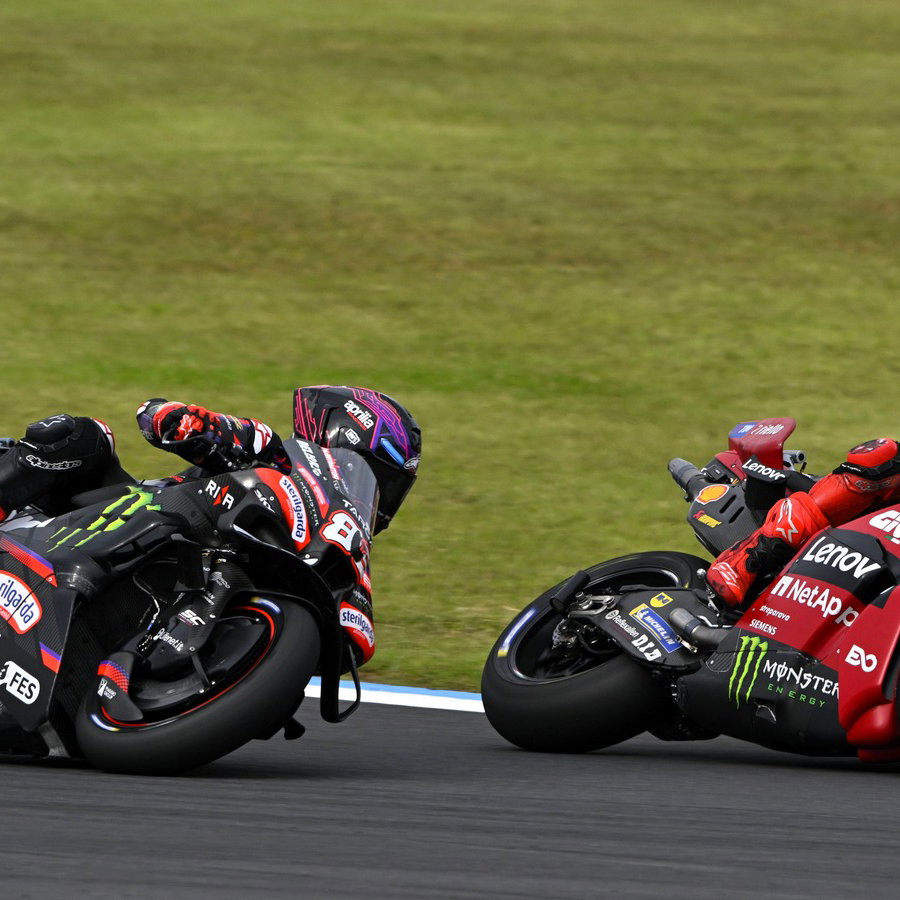
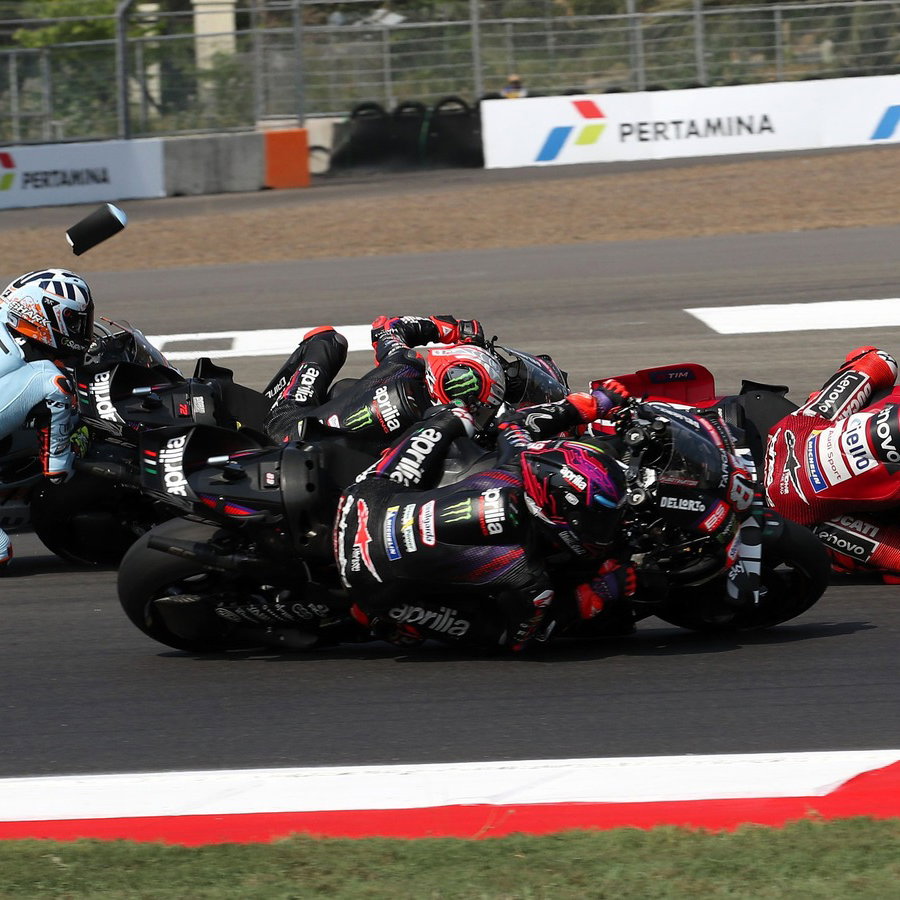
Brad Binder’s RC16 was again the fastest machine along the Aragon back straight last weekend, having reached 356.4km/h last year compared with a slightly slower 352.9km/h this year.
However, most other manufacturers were also slower in 2026, while top speed can be influenced by factors such as the aero package, slipstreams and wind direction.
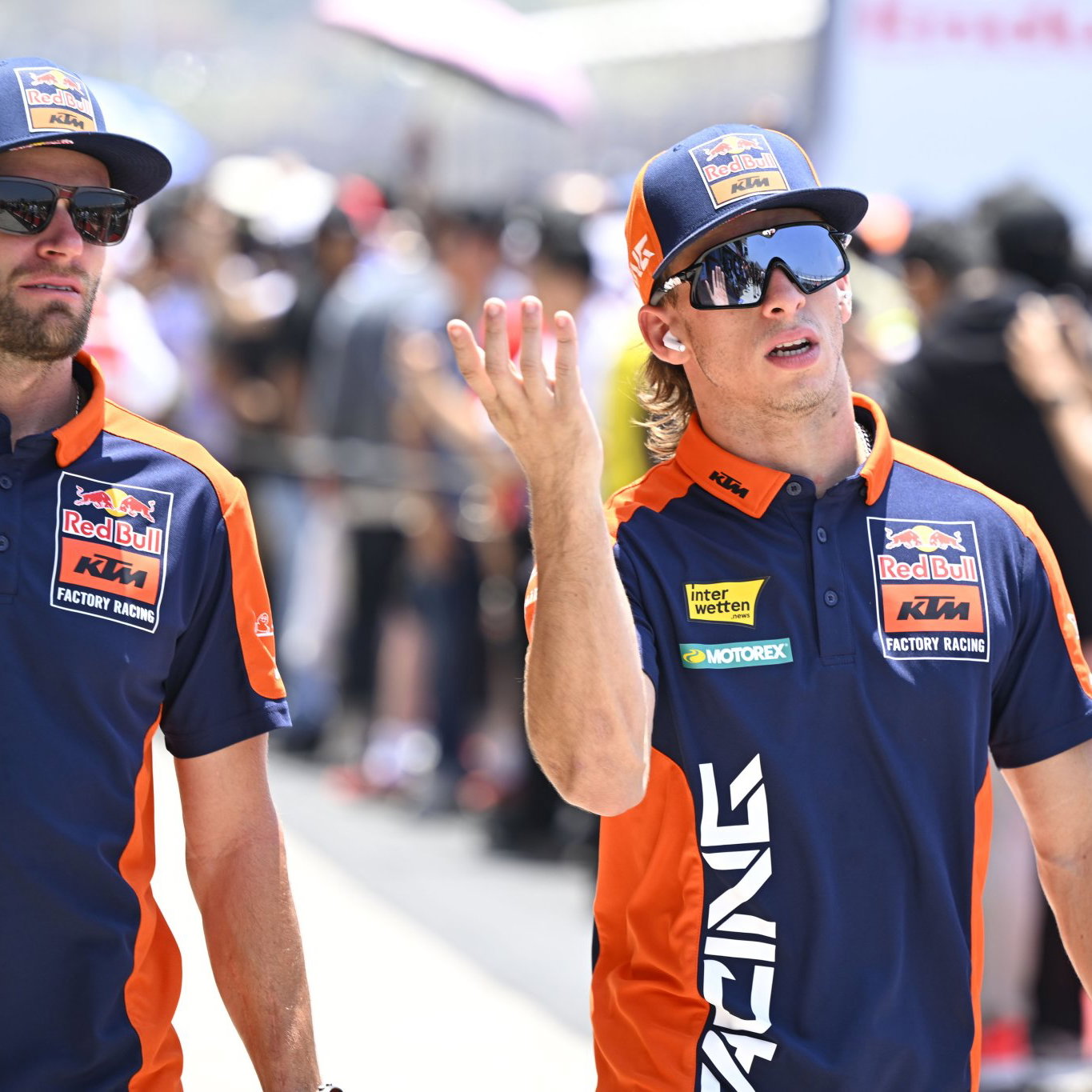
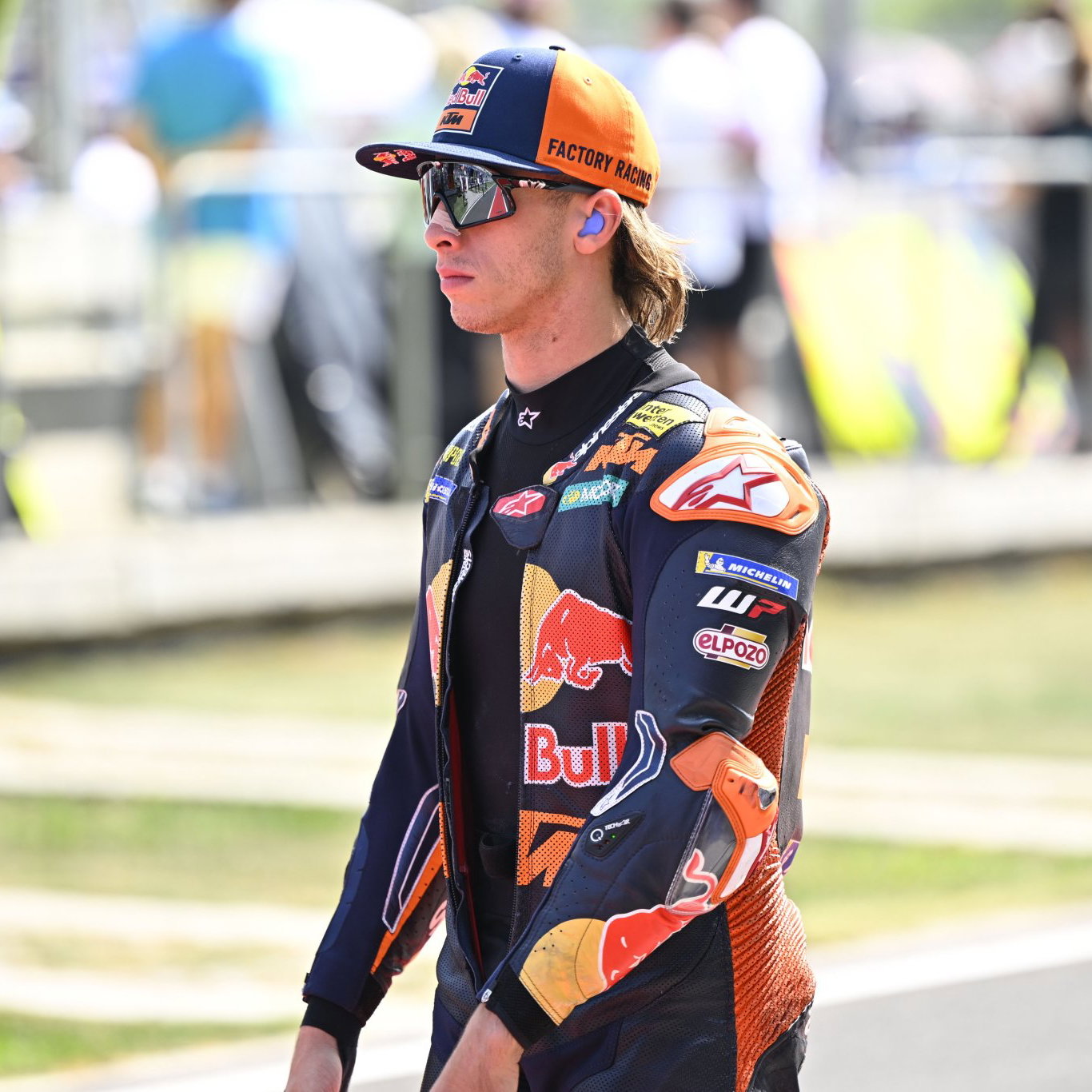
Either way, when questioned about the 500rpm rumours after the race, KTM test rider Pol Espargaro, competing at Aragon in place of Maverick Vinales, said he “hoped” the revs would increase.
The Spaniard also explained why changing the rev limit affects much more than just top speed.

“I have no idea what's going to happen with the revs," Espargaro said. "I hope so. It would be nice because when you get revs, it's not just what people imagine - 5th and 6th [gear], and top speed. That’s actually what you get the least.
“What you get more [benefit from] is that sometimes you need to make the gearbox in a different way because you are cutting [hitting the rev limit] so much and you are missing that 500 revs to arrive to the next corner.
“You need to adapt all the gearbox, which affects all the corners. So it's pretty critical.
“So if we get it back in Misano, that's going to be amazing because Misano also is a very grippy track where you need a lot of acceleration and having some more extra revs will help a lot.”
Engine use
Even if the KTM engines are now working normally, the Austrian manufacturer still paid a price through lost performance while the revs were reduced.

If we assume the cut was introduced after Acosta lost power in Catalunya, triggering a huge accident for Alex Marquez behind, then the KTMs have been ‘restricted’ for seven rounds.
But there is also a potential ongoing cost in terms of extra mileage required from a rider’s remaining engines to compensate for those already withdrawn.
The latest MotoGP engine list shows Binder is most at risk, having opened six of his nine permitted engines this season, with three already withdrawn from use.
Toprak Razgatlioglu is the only other rider with three withdrawn engines. However, he has 11 available for the season, rather than nine, due to Yamaha’s concession status.
Acosta has lost both of his most recent engines, but his 6/9 used for the season is only marginally higher than the 5/9 average and the same as Aprilia riders Jorge Martin and Marco Bezzecchi.
Tech3’s Enea Bastianini is on 5/9, with two withdrawn, while injured team-mate Maverick Vinales has opened only four engines so far, with none withdrawn. As a replacement rider, Espargaro took over Vinales’ engine allocation during his stand-in appearances.

What happened with Yamaha’s engines in 2020?
The last time a MotoGP manufacturer faced a similar engine reliability issue due to a faulty component was Yamaha in 2020.
Yamaha also initially sought permission from its rivals to have its faulty parts, the valves, corrected.
However, it later withdrew the request and was subsequently docked constructors’ and teams’ points when it emerged the root cause of the problem was a change of valve manufacturer relative to the valves present in their sample homologation engine.
Yamaha said the change of supplier was 'an internal oversight and an incorrect understanding of the current regulation', adding that both types of valve 'were manufactured according to one common design specification'.
Lin Jarvis, then managing director of Yamaha Racing, explained at the time: “The regulations don't say you can't use two different suppliers, it says the parts must be identical in every respect. This was the misunderstanding in Japan.
"The sample [homologation] engine for this season was fitted with used valves, let's call it valve 'type A'. But we began the season with eight engines with valve 'type B'. It was an innocent misjudgement of the regulations.
"Then we had a technical failure [at Jerez] and when we investigated we found that not only the 'B' valves were different from the sample engine, but they had some weakness. The batch produced followed a different procedure.
“That's why we requested to the MSMA to change the valves. We were unable to get the evidence from the valve supplier, so we withdrew that application, and we looked for another solution.
“…We suspended use of the [Jerez] engines, apart from practice and qualifying in Austria for two riders. All our engines, apart from the initial eight, have now been fitted with type ['A'].”
Joan Mir went on to win the 2020 title for Suzuki ahead of Petronas Yamaha’s Franco Morbidelli, whose team-mate Fabio Quartararo, winner of both of the season-opening Jerez races, faded to eighth in the standings.

Peter has been in the paddock for 20 years and has seen Valentino Rossi come and go. He is at the forefront of the Suzuki exit story and Marc Marquez’s injury issues.