Inside Biggin Hill: The colossal tech operation powering modern Formula 1 broadcasts
We take a tour of the Formula 1 Media and Technology Centre in Biggin Hill to get a behind the scenes look at a live F1 broadcast

In just a few short years Formula 1’s popularity has exploded and continues to grow.
Last year Formula 1’s global fanbase reached 827 million jumping by 63% increase since 2018. Since then we’ve seen the additions of more races, sprint formats and a host of new tracks around the globe.
It’s no secret that the logistics of an F1 weekend are a colossal challenge. But for viewers at home it can be hard to comprehend the level of preparation that goes into every broadcast.

Crash was invited to the F1 Media And Technology Centre (MTC) in Biggin Hill to look behind the curtain at what it takes to execute a Formula 1 broadcast.
It was admittedly hard not to be impressed with the pure scale of the operation that brings F1 to global viewers every weekend.
Biggin Hill has changed dramatically in recent years which now allows Formula 1 to run a dual operation remotely and on track. Originally Biggin Hill was described as not much more than a warehouse located beside an airfield just south of London but the premises has since been transformed into a state-of the-art Media and Technology Centre (M&TC).

Formula 1 credits that transformation to their official technology partner, Lenovo, who came onboard with the organisation in 2022 and were able to pull off a complete remodel and technological overhaul of the centre in just 10 weeks. The majority of the processing and publishing systems have moved from the Event Technical Centre (ETC) at the race, to the M&TC as part of a hybrid remote transformation.
The M&TC is not just a broadcast centre though. It now handles the majority of race-weekend processing. The facility runs more than 180 bespoke software systems comprising over four million lines of code, supported by Lenovo infrastructure.
The ETC is the biggest, most complex transportable facility of its type in the world. When assembled, it houses 750 pieces of equipment, which run over 40 bespoke software systems. Over a race weekend, it will process between 350,000 and 400,000 timing transponder passing events, produce 750 to 800 pages of electronic official documents and generate approximately 300-400 GB of data per event.
It’s admittedly hard not to be impressed with the pure scale of the operation that brings F1 to global viewers every weekend. During a tour of the M&TC we were given the chance to see first hand what a live broadcast entails as we watched the team in action during FP1 during the Austrian Grand Prix.
So what happens during a live broadcast?

The Formula 1 team in Biggin Hill consists of hundreds of staff members who all work intensively to bring a race weekend to life for viewers at home. During our tour of the facility we are met with staff pouring over hundreds of Lenovo monitors in the broadcast gallery.
Head of Live Production Wendy Hendrickx told Crash.net: “We actually paid visits to NASA before we built this to see ‘how do you run a place like this a big place like this?’”
It’s difficult not to make the comparison to ground control at Houston with staff looking into a sea of screens, monitoring live footage from the track, creating bespoke on-screen graphics and crafting narratives and story lines for fans to follow.
Meanwhile on track about 470 items of equipment are deployed around the circuit, including cameras, timing system sensors, onboards receive sites, marshal lights, and more. F1 produces over 500 hours of live TV over the season and over 200 hours of post production content including global news packages, promos, documentaries and features for TV Broadcast and social media.
It’s understandably a high pressure environment heading into each race weekend. Hendrickx gave some insight into the intensity of running a live broadcast session: “The most intense session of the weekend is Q3. It's not the race. The most intense time for a broadcast team is Q3 on a Saturday in qualifying.

“It's then when we need to capture every single car. The last 2 and a half minutes they come out and do one lap, and they are a few seconds behind each other, and any car at at any point can be quickest and go for pole, and it's just a tiny mistake that can make the difference between being on pole or being on on fourth position. So, we need to be on top of our game and capture everything."
Attempting to execute a seamless broadcast each week is just part of what the team does. Lenovo’s technology facilitates the team on track and at Biggin Hill capturing all the crucial data to feed back to the teams and FIA. A staggering 650 terabytes of data are transferred over the race weekend from the track to the M&TC including live videos, lap times, telemetry and more.
F1 is a sport where quick decision making is crucial and Lenovo’s technology plays a central role in facilitating those decisions. Teams are all fed information like critical car data covering engine performance, suspension, gearbox, fuel, G- forces and driver inputs which all reach pit walls quicker than ever. With a race calendar now stretching over 24 events across, the F1 circus seems to keep getting bigger and bigger. This means that all of F1’s broadcast operations' hardware really gets put through its paces.
F1 Director of IT Chris Roberts spoke about how F1 has put huge faith into Lenovo to ensure their hardware can stand the test of a full season.
“We're actually talking about the ability to robustly move around the world, 24 races, 21 countries. Our kit is not inside a sanitised, chemical, temperature controlled data centre. It is loaded onto trucks, it's loaded into cargo holds of planes, it's on the runway, it's forklifted around.” he said.
“And we need our technology to perform even though it's been through those conditions on repeat. Sometimes within a 48 hour period of time where we have back-to-back races.
“So for us, the technology that we use through Lenovo is really about having that trust in the kit so that we know, for us reliability means it can get to a new location on a Tuesday morning, be opened up almost like a suitcase, our servers are in racks which are in bespoke containers that get moved around, open it like a suitcase, plug it in, switch it on, and then it's going to be operational and working ready for a Thursday for high speed track tests.”

But what about other challenges? There are any number of frenetic situations in a live broadcast environment, especially when dealing with a sport that is being shown in 180+ territories at once. Unpredictability is something that the team in Biggin Hill have grown accustomed to.
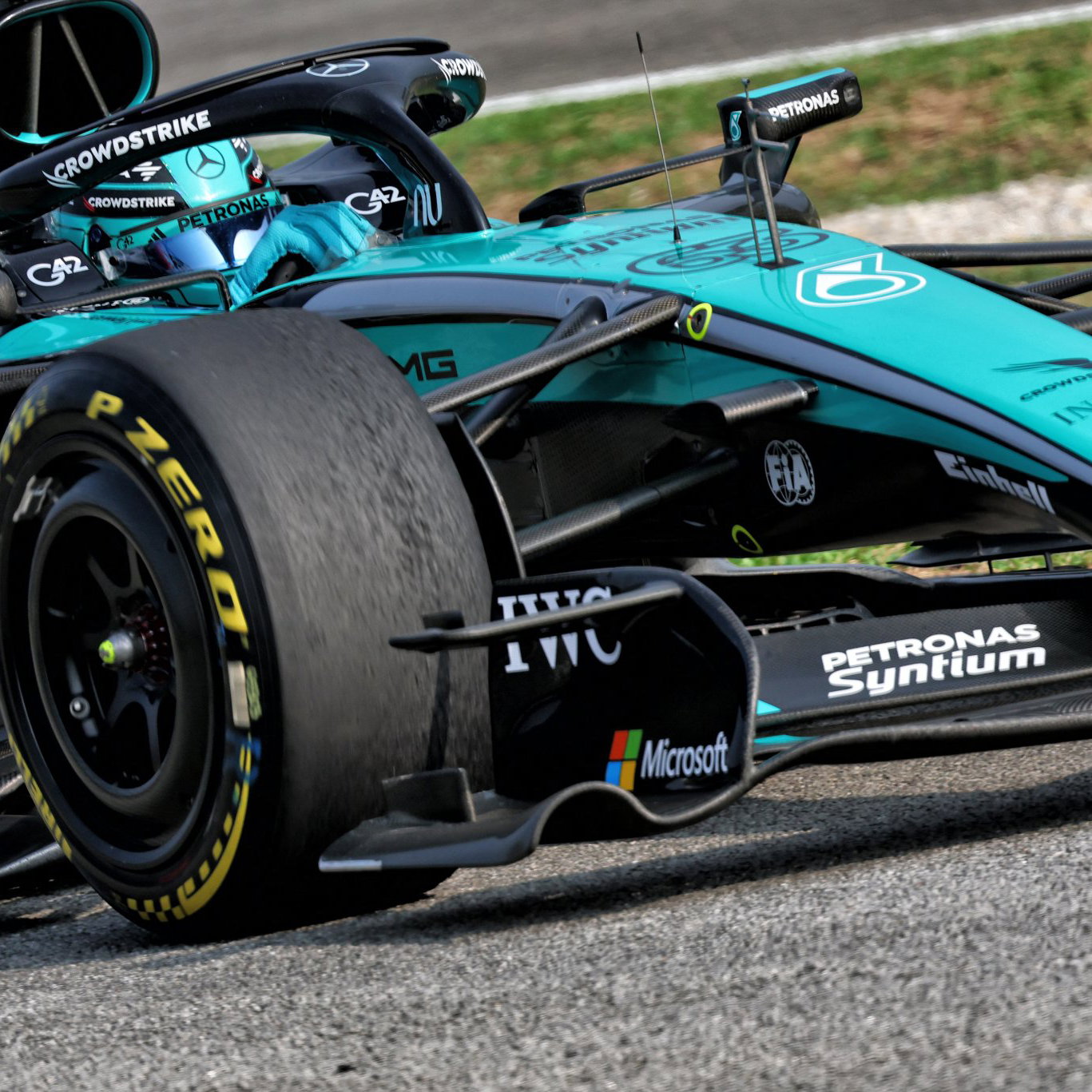
Any Formula 1 session with 22 cars flying around a circuit at speeds of over 200mph can feed into this unpredictability. Unfortunately crashes are part of many weekends across a season, and while safety has improved enormously in Formula 1 there is always a risk of serious injury or worse. Romain Grosjean’s infamous crash at the 2020 Bahrain Grand Prix is one that immediately springs to mind.
When asked how the team handles a tense and volatile situation such as this Hendrickx told us: “We have very clear guidelines on what to do and what not to do. You will not see anything. The team is trained as well. We need to make sure that, say Grosjean for example, is safe. We need to make sure that all the marshals at track are safe. We need to make sure that our camera operators are safe, right? Just as a team calls out to their drivers on the team radio, ’Are you safe? Are you okay?’ We do the same thing to our camera operators. ‘Are you okay?’
“We want to hear them saying, ‘Yes, I'm fine.’ Then we wait. We see what's developing. But, we do steer our helicopter to that point because it's not just us, but also the FIA, they want to see, we want to see what's going on. Once we got an all clear, everybody is safe, only then we run a replay.”
What does the future hold?
Lenovo has committed to continue to push the limits of their technology in order to constantly improve and innovate Formula 1’s broadcast production. Just this year F1 announced the deployment of Lenovo Neptune Liquid Cooling, a breakthrough cooling technology which dramatically boosts performance while increasing energy efficiency by up to 40%.
Lenovo’s technology is also working to help F1 reduce physical hardware and power consumption by increasing performance and processing capabilities, while also minimising travel through enhanced remote operations. Initiatives like Asset Recovery Services and CO2 Offset Services support the organisation in achieving its sustainability goals.
Ultimately, the M&TC’s state-of-the-art hybrid setup ensures that Formula 1 stays ahead of the curve as the sport’s global footprint expands. By constantly evolving its remote capabilities and leveraging cutting-edge hardware, the broadcast team can keep pace with a gruelling 24-race calendar and also actively elevate the viewing experience.
As long as the demands of the fanbase grow, F1's tech-driven nerve centre will continue to innovate, bringing millions of viewers closer to the high-speed drama than ever before.