“Seven engines blew up” - KTM explains “most horrible time” in MotoGP
KTM has revealed seven MotoGP engines failed during what Pit Beirer described as the project’s “most horrible time”.

KTM suffered seven MotoGP engine failures after a hidden manufacturing fault struck this year’s RC16, creating what Pit Beirer called the project’s “most horrible time”.
The crisis arrived just as KTM was recovering from its company-wide financial problems and was especially difficult to understand because MotoGP engine specification had been frozen since the start of last season.
But if the design hadn’t changed, why were the ‘same’ KTM engines now suddenly failing?
Other unrelated reliability problems further complicated the search, but KTM eventually traced the issue to a quality-control fault in a high-stress component supplied externally.

Even then, KTM could not simply replace the affected parts because the sealed engines could only be opened with permission from its MotoGP rivals, who were naturally “suspicious”.
“This year, I thought we go back to a normality, then this engine issue almost killed us,” said KTM motorsport director Pit Beirer.
“Beside our other [financial] problem at home, this was for me the most horrible time in this whole MotoGP project.
“We lost completely control and could not react, with having a [faulty] part in the engine, having sealed engines.
“After last year's homologation, it was the same engine last year, this year. You're not even allowed to touch one part.

“With these high-revving engines, when one engine breaks, it feels like, ‘Okay, can happen’. It happens to all of us sometimes. So you don't panic.
“But then another one, and then you bring a replacement and that thing is breaking again.
“You don't understand and you don't know where to start, because if you tune and you break things, you want to go one step back. But there was no step back.
“So that was the next thing we had to go through. So I really hope that from now we can go back to a normal scenario.
“I was also really happy to see that Pedro actually picked it up in Aragon, maybe where we left it in Barcelona.
“Because until Barcelona we had a lot of hope. We got closer and closer, and then this whole thing happened.”

“We realised in Mugello”
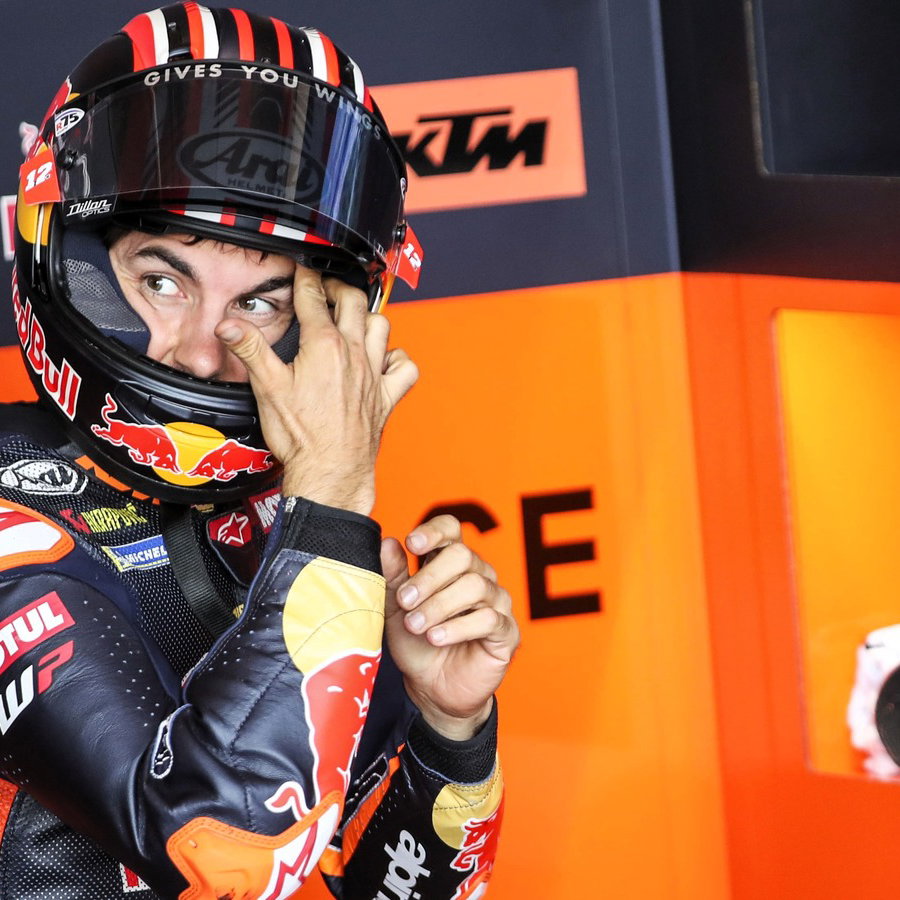
KTM’s most visible engine-related incident came when Pedro Acosta lost power while leading in Catalunya, triggering a huge accident when he was struck from behind by Alex Marquez.
However, Beirer revealed that incident was caused by a separate ECU issue.
“What happened to Pedro in Barcelona happened also in this moment when we had already [engine] problems.
“So then you have another problem which the whole paddock has never seen: An ECU just switched off. No signal for one moment, and then back in the paddock the bike was running fine, no problem.
“So this was another hard one where we had support also from Magneti Marelli to find out what was going on. “

"It was happening around 50-100km"
While the ECU issue didn’t break any engines, the undiagnosed internal fault caused multiple failures at the following round in Mugello.
“We realised [we had the engine problem] in Mugello. We broke an engine in the morning. Okay, you change the engine. But we broke two more engines on the same day. And that was like, you don't know what's going on now.
“We didn't really know which engines we could trust, and then we started to take back the [old] engines with a lot of mileage. Because we knew they cannot have this [issue].
“Something must have been [breaking suddenly] like a glass or a crystal, because it was happening around 50-100 km. So it was clear there's something in there that is not normal.”
Before KTM could ask the other manufacturers for permission to intervene, it had to identify the exact cause.

“We could not ask for permission to do something, because we didn't know what to do. So in that moment, it was not up to the other manufacturers.
“Then suddenly, we understood what the problem was, and then we asked for permission. And we had to document which supplier, which problem, X-ray pictures.”
"There was air where there should be a connection"
KTM has not publicly identified the component, describing it only as a high-stress powertrain part supplied externally which failed to meet the required quality standards.
Beirer said the fault was clear for the other manufacturers to see: “There was air where there should be a connection and welding.
“So, [the other manufacturers] understood all of this, and I want to say thank you also to all the manufacturers to give us then the green light between Sachsenring and Silverstone to [change the faulty parts].

“IRTA was with us in the building, observing what we are doing. We got really great support [from the other manufacturers].
“Not from all [manufacturers] in the same moment, but some of them were really helpful, and at the end, the group decided to give us the green light.”
Beirer said he understood why some manufacturers were hesitant to grant permission at first.
“The other manufacturers didn't really agree immediately. I think it's very normal, because you're suspicious,” he said.
“Somebody wants to open engines, then you go, ‘Huh? What do they want to do?’

“So, for me, that was totally fine. There was not one stupid question. They just [asked]: ‘Okay, who is the supplier? How much [do you want to change]?' Then they wanted to see the batch numbers, the serial numbers...
“You need to bring up things which you will never be asked normally. Some things are with the supplier, and there's a time difference to the supplier, so that was a hot topic.”
Approval ultimately depended on KTM proving the problem was caused by a quality-control failure rather than a design change, could not be solved by reducing performance and presented a safety concern.
“Yes,” Beirer replied, when asked if he feared for the safety of the riders.
Although KTM’s engine performance was reduced from Mugello, Beirer said that was because the team reverted to older, higher-mileage engines rather than lowering the rev limit on the affected units.

“No, the problem was too big,” Beirer said of solving the issue by reducing RPM alone.
“So, we really had to switch to these older engines… which was more effective than reducing the RPM.”
“Seven engines blew up”
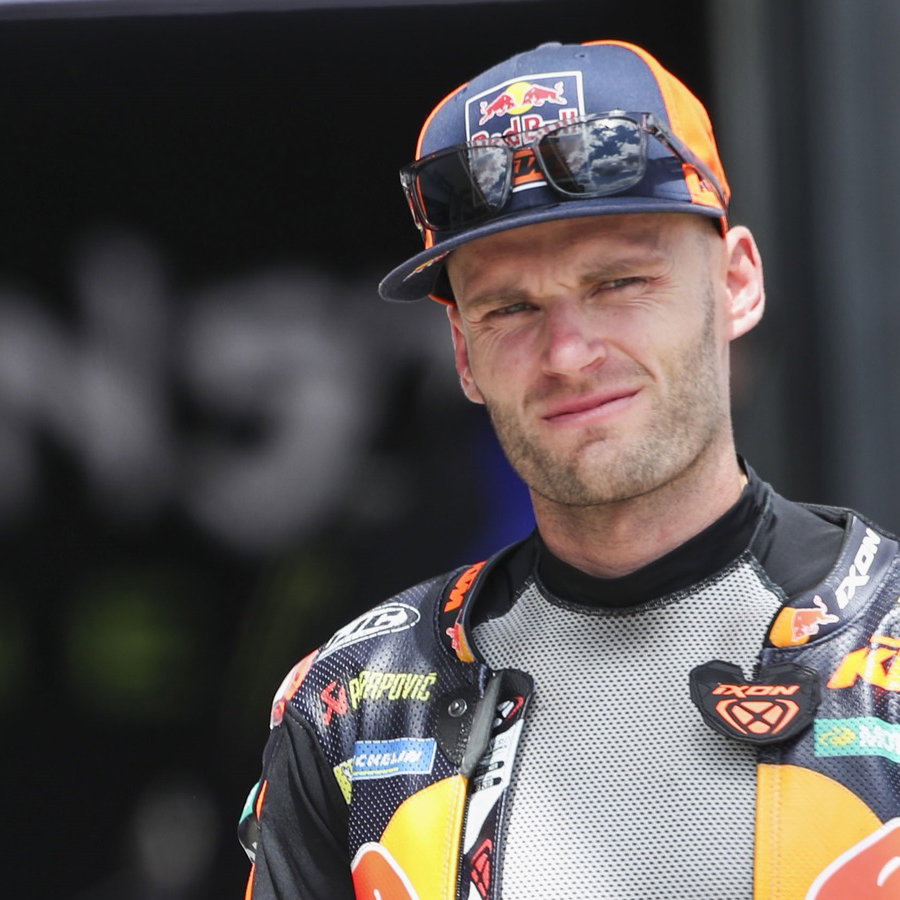
“With Pedro, we were actually a bit luckier than with Brad. I think we only lost one with Pedro,” Beirer said.
“But in total, we had seven engines which blew up in a certain period.”
That means, even with the fault now rectified, KTM might need to run some of its remaining engines for longer than planned, hurting performance.
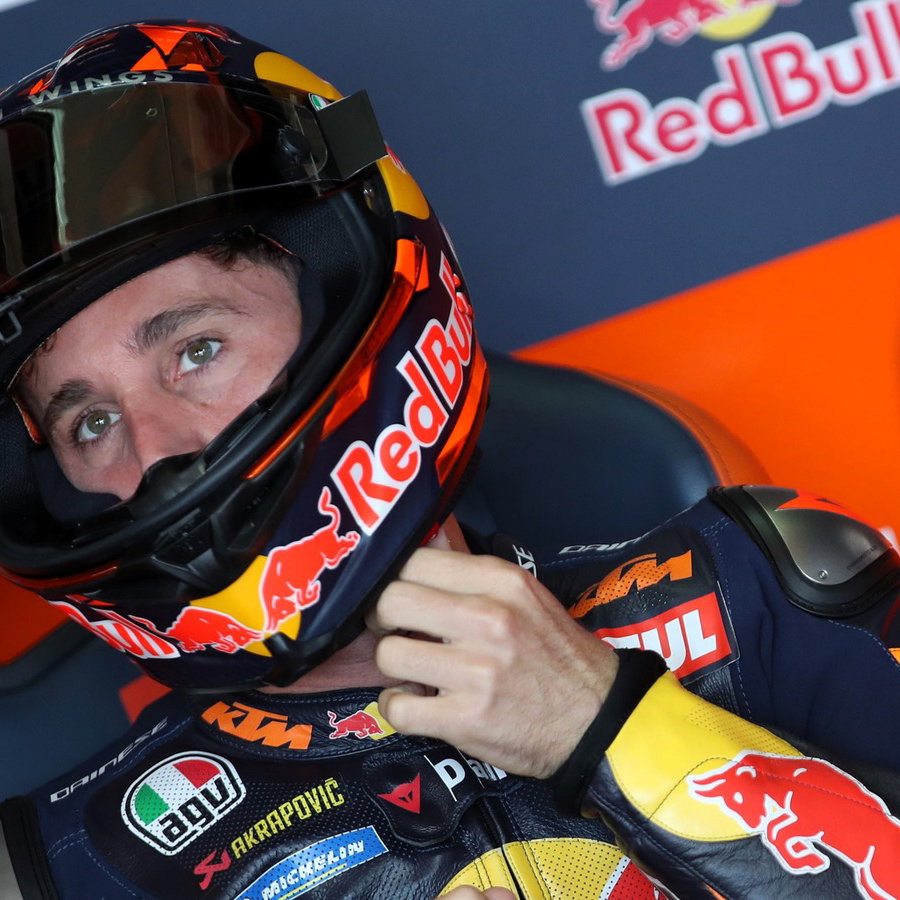
Star rider Acosta starts this weekend's Misano MotoGP, where the KTM riders are rumoured to be getting 500rpm returned, fresh from a podium at Aragon and holding sixth place in the world championship.

Peter has been in the paddock for 20 years and has seen Valentino Rossi come and go. He is at the forefront of the Suzuki exit story and Marc Marquez’s injury issues.