The worrying MotoGP trend beginning to show for Ducati after Silverstone
The 2026 MotoGP season resumed with the British Grand Prix, and Aprilia delivered on the pre-weekend promise of a clean sweep of pole, sprint victory and main race win. It did so as Ducati experienced one of its worst showings of the season, opening up the title battle in a way that should concern the brand…

If there is one circuit of the 2026 MotoGP calendar that could almost have been tailor-made for the Aprilia RS-GP, it’s almost certainly Silverstone. The fast, flowing layout plays into every strength the Aprilia has right now. Moreover, it seemed to play into every weakness Ducati has.
Ducati suffered an alarmingly - but, perhaps not unexpectedly - similar weekend to its Dutch Grand Prix at the end of June. On that weekend, Aprilia romped to a 1-2-3 in the grand prix, while the nearest Ducati was fourth and just under six seconds from a podium place.
At the British Grand Prix, Aprilia locked out the top three, with Trackhouse’s Raul Fernandez celebrating his new two-year deal with the American outfit in fine style ahead of a renewed championship leader in Jorge Martin. Marco Bezzecchi gritted his teeth to take third.

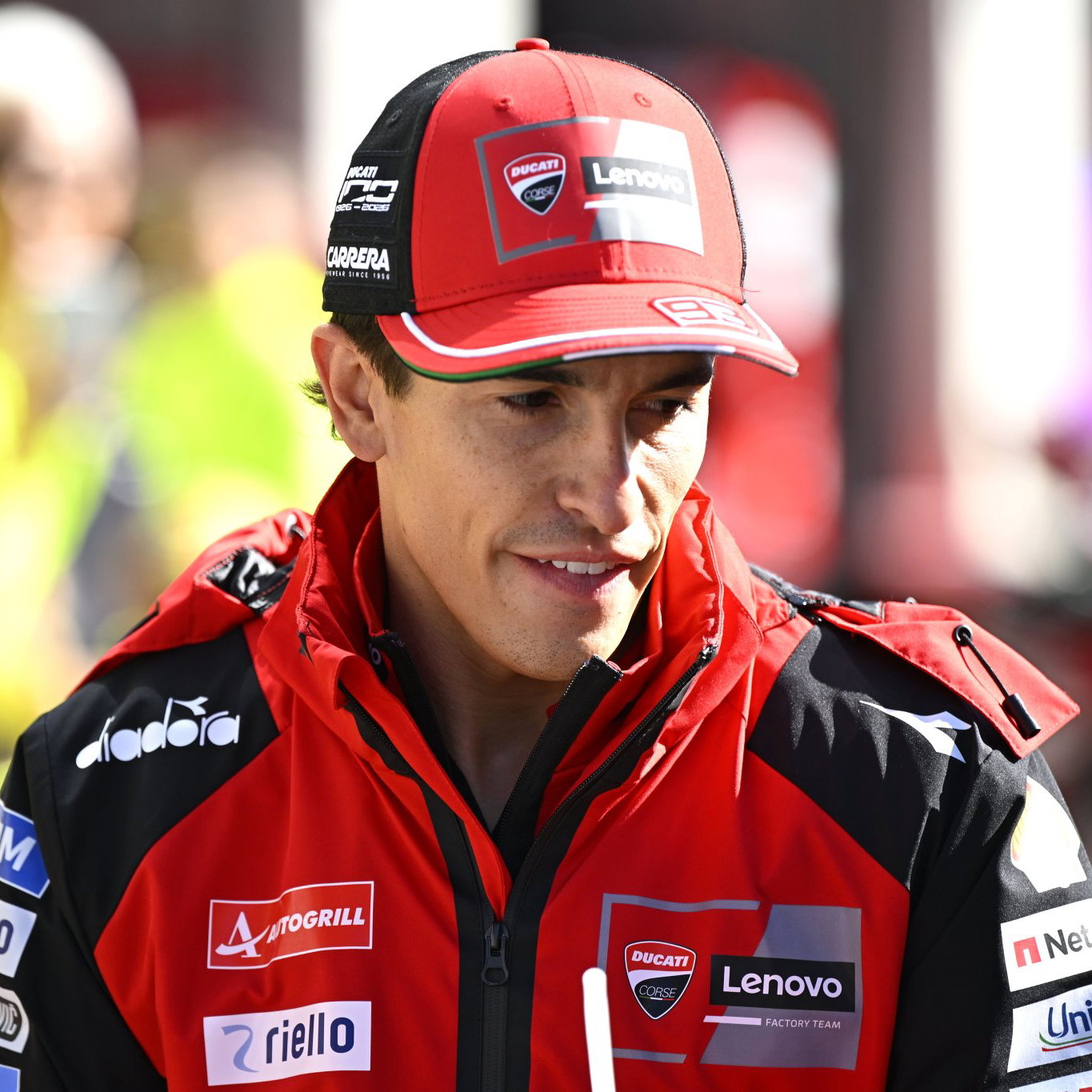
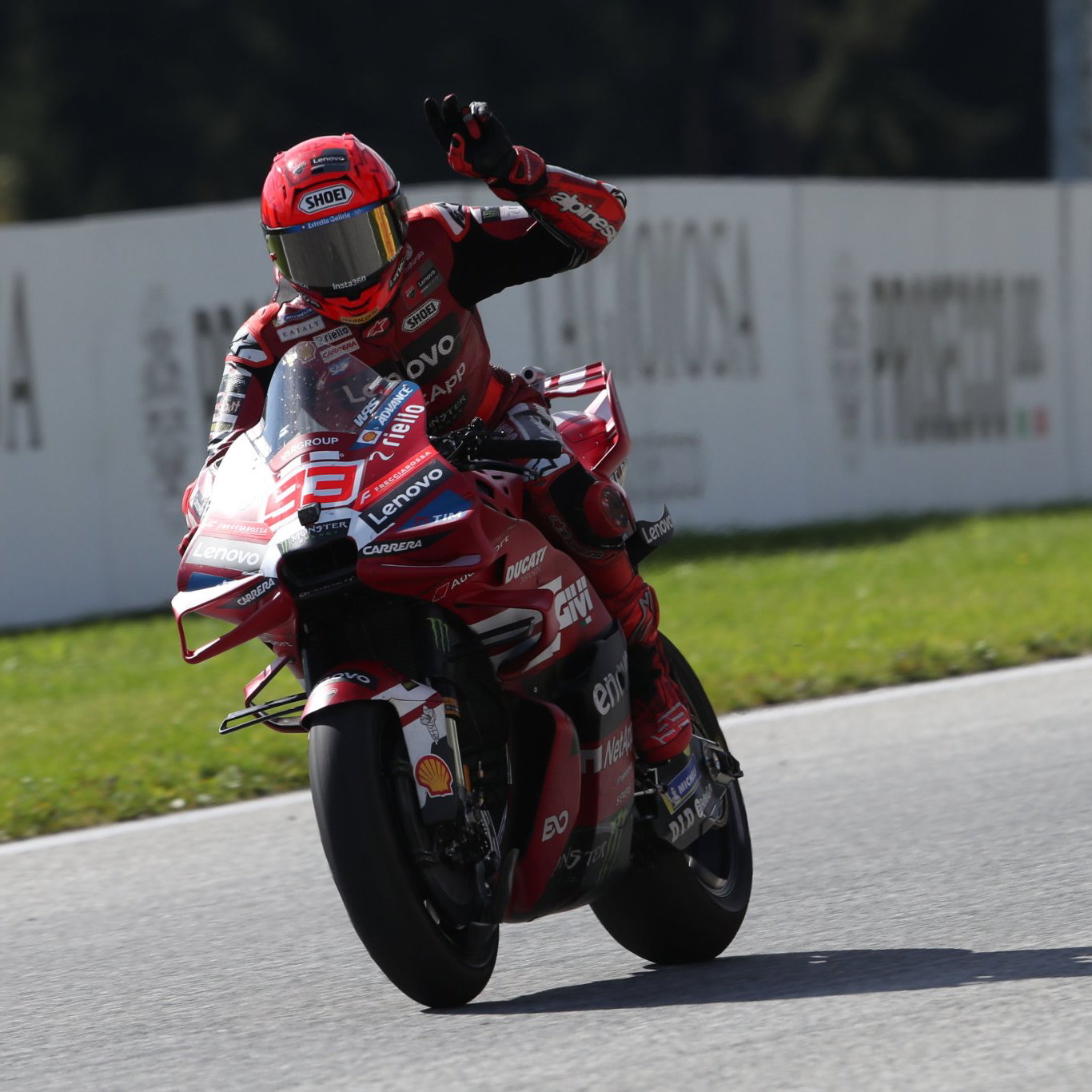
The best Ducati rider was Gresini’s Alex Marquez, a specialist of fast, right-handed tracks, in fourth, albeit just over a second away from the podium on this occasion. As in Assen, Marc Marquez was only seventh.
If Aprilia’s 2025 win at the British Grand Prix can be viewed as one thing, in hindsight, it was the beginning of something altogether more concerning for its Italian rival Ducati. It’s not the first weekend this year where Aprilia has had a clear advantage over Ducati. And it’s true that there has been a great deal of toing and froing between both brands.
On the run to the summer break, Marc Marquez and Ducati were the ones to beat at Balaton Park as Aprilia struggled. The same was true at Brno, though Ai Ogura - who crashed at Silverstone - gave him a good go on the Trackhouse Aprilia. In Germany, the balance of power once again shifted towards Ducati and away from Aprilia.
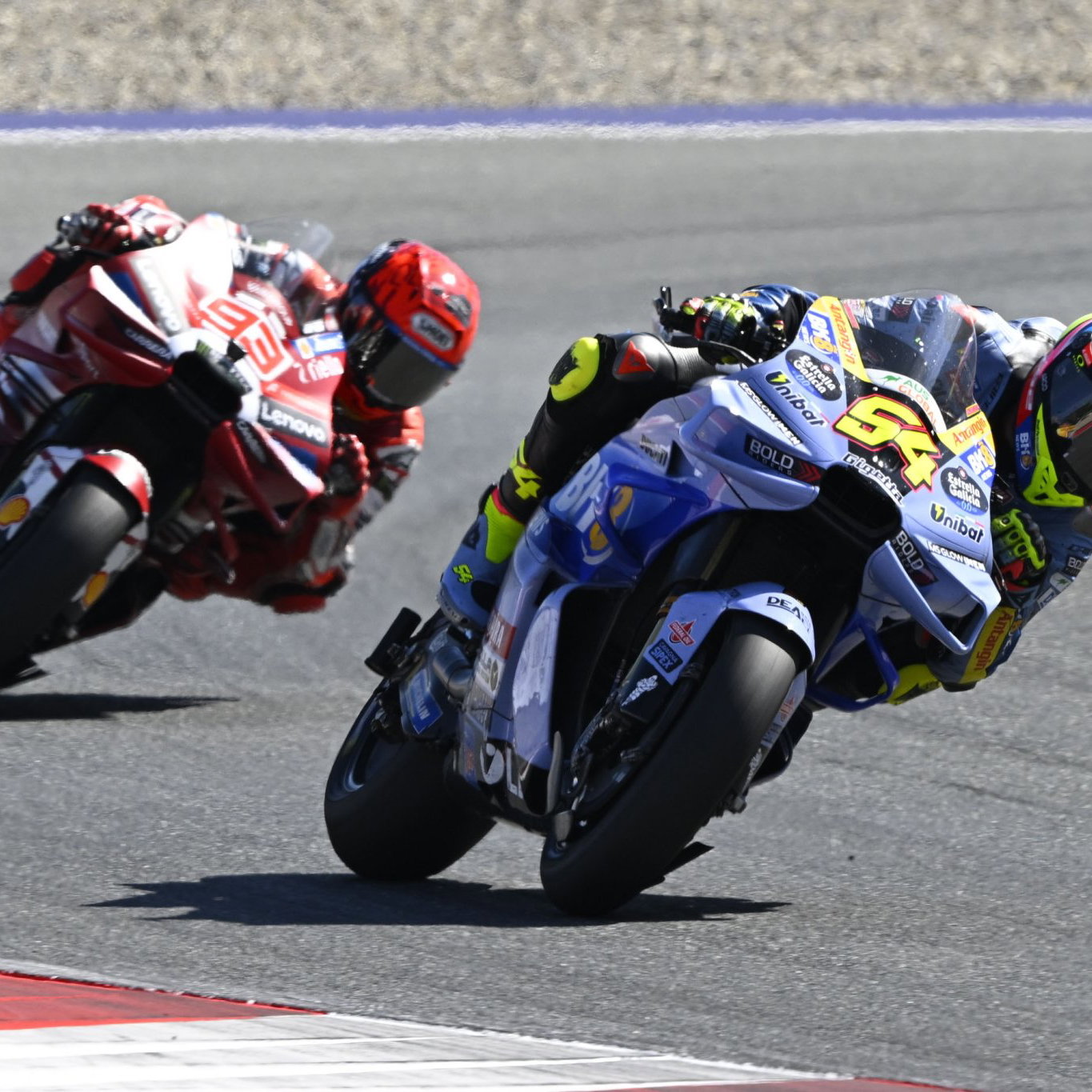
The GP26 and the RS-GP 26 have clear strong suits. The former is stronger in stop-and-go circuit layouts, like Jerez, like Balaton Park, for example. The Aprilia is almost untouchable when corner speed and agility are the circuit characteristics.
Aprilia’s bad days have tended to come when it has had podium pace, but something has gone awry. In Hungary, that was Martin’s Turn 1 pile-up; in Germany, it was a poor qualifying for Martin and a crash in qualifying that left Bezzecchi with a fractured collarbone.
On Ducati’s bad days, worryingly, it has simply just lacked pace compared to the Aprilia. That was the case at Silverstone, something compounded further by higher-than-expected tyre graining, particularly on the soft in the sprint. Marc Marquez was lucky to hold onto a point in that race. In the grand prix, the drop was a bit better, but Ducati still lacked pace overall. Typically, the GP26 has to use the rear to turn more, whereas the Aprilia glides through corners. When tyres are somewhat more fragile, the Ducati experiences that drop a bit more violently than the RS-GP does.
The championship has been reset after Silverstone. Where five riders came into the round covered by 25 points, that has grown to 41. Martin’s sprint win and runner-up spot in the grand prix has put him 31 points clear of Bezzecchi, who managed a brace of third-place finishes on his factory Aprilia.
Marc Marquez remains the leading Ducati, but he’s faded to 40 points adrift, just as he was after Assen. A more favourable circuit in Aragon follows next, but Silverstone was a preview to the massive task Ducati and Marquez face to retain their titles in the second half of the campaign.

Anger, heart and balls: Aprilia’s sensational Silverstone
The short version of why Aprilia was so strong at Silverstone has already been touched on. But it was three very different, more specific reasons that meant the podium trio excelled in one way or another.
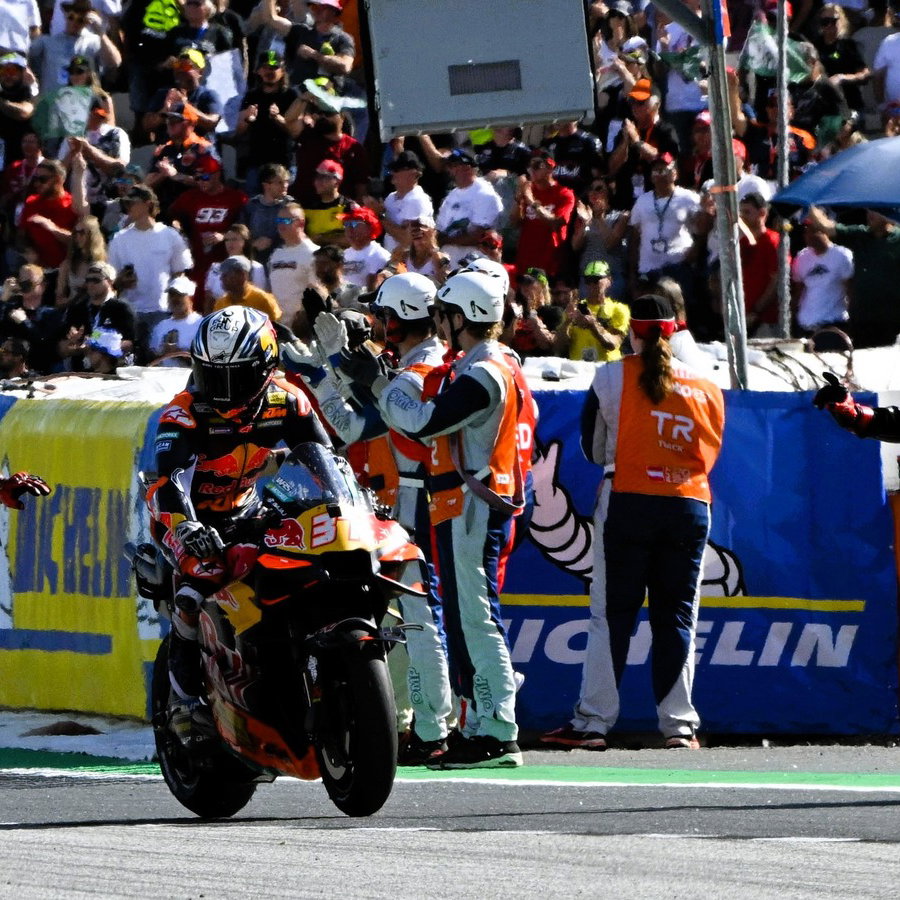
A day on from a crash that was “100% my mistake” in the sprint, Raul Fernandez was peerless in the 20-lap grand prix. Capitalising on polesitter Jorge Martin’s rear ride height device not disengaging at Turn 1, Fernandez scythed into the lead on the opening lap.
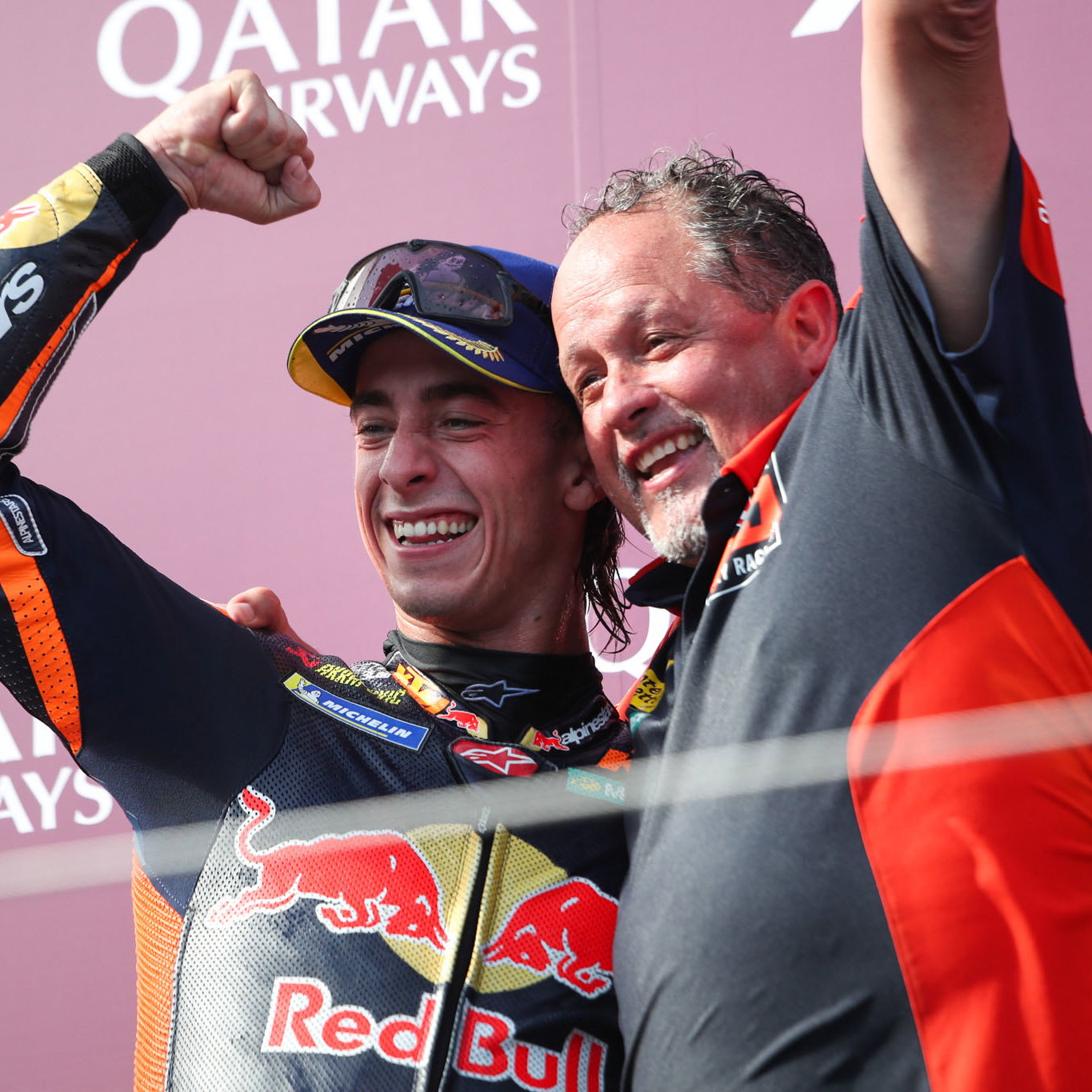
By the end of the first tour, he was already one second up the road. At the end of three, he was 2.3s clear. On lap six, it was up to three seconds, and it kept rising to over four seconds, before he eased it off in the last laps to take the chequered flag 2.5s clear of Martin for his first grand prix win since last year’s Phillip Island round.
Everyone was caught off-guard by the extreme tyre drop in the sprint on the soft. Fernandez never got to experience it for himself due to his crash. As such, he came into the warm-up on Sunday morning still steaming from his error. But that actually proved to be a blessing in disguise, because he discovered how not to treat the medium rear in that 10-minute session.
“I think the warm-up helped me to understand where the limit of the rear tyre was,” he said in the post-race press conference. “This morning, I was quite angry with myself, and I pushed maybe too much. And there, I understood that the limit of the tyre was trying to make 1m58.4s, 1m58.5s.
“And straight away, I tried to be in 1m59s low. So, in the morning I learned where the limit of the rear tyre was. For that, I didn’t care about the performance of the rear tyre at the end of the race.”
Fernandez fired in two 1m58s at the start of the race, before slowing that pace slightly into the low 1m59s. Come lap 18, he was still able to circulate in the low-1m59s. While the Aprilia holds onto its tyres well, he ultimately made the difference.

“I think that also what you have to realise is someone was willing to take the gamble,” LCR’s Cal Crutchlow offered on Fernandez’s race. “Somebody is willing to push, and the others probably weren't willing to push. Raul today had more balls in them first five laps than everyone else to say, ‘OK, I'm OK with the rear tyre, I'm going’. Where the others may have thought, ‘OK, he's maybe going to come back to us in 10 laps, and he didn't. Quite often with the Michelins you can't just go bang like that, despite the temperature. It's amazing that he didn't come back.”
It was a result that made him the 12th Silverstone race winner in 12 British Grands Prix and came days after his 2027 deal with Trackhouse was confirmed. Team owner Justin Marks spent the weekend praising Fernandez for his ability to still show his true colours while uncertainty hung over his career, and again after the race for justifying the faith Trackhouse has shown in him.
Perhaps a better start for Martin could have changed the result. He dropped as low as fourth at one stage early on the opening lap, but quickly got back into second. By the time he’d done so, though, on lap nine, Fernandez was already 4.460s up the road.
Given his fastest lap of the race was 0.433s slower than Fernandez’s, it’s hard to say that a better start was all Martin needed to fight for the win.
Regardless, Martin has extended his championship lead. And, more crucially, has seemingly dug himself out of the hole he found himself in after the Catalan Grand Prix. He went back to a set-up similar to what he used to win both races at Le Mans. That allowed him to take pole with a new lap record and a third sprint win of the season.
He came to Silverstone admitting it was “crazy” that he led the standings. He leaves it claiming “I don’t care” what his position is at this stage. But it was a much-needed reversal in fortunes, even if there was a note of caution following his sprint win.
“We are out a bit of the hole that we were in, and for sure this gives us a lot of motivation,” he said on Saturday. “We have full trust in ourselves. I have full confidence in my team, in myself. I knew it was a matter of time to get out of that situation. But it's not that now at Silverstone we won and everything is alright.”
That sentiment is also true for team-mate Marco Bezzecchi. But a pair of third-place finishes, given he could barely walk on Sunday morning, and his dismal run of late, was the confidence boost he sorely needed.

Bezzecchi spent the summer recovering from a collarbone fracture and a knee injury that proved a bit more complicated than originally thought. He was cleared to race at Silverstone, but was clearly far from his physical peak.
Somehow, he came through to finish third in both races, fending off Alex Marquez in the grand prix for a podium that reduced him to tears. From leading the championship after a dream win at Mugello at the end of May, everything that could go wrong for Bezzecchi did. He acknowledged how tough it had been for him after the race on Sunday.
For Aprilia CEO Massimo Rivola, it was a clear sign of just how much heart Bezzecchi truly has.
“When you see a rider that struggled to walk in the morning and had a race like that, you can imagine how big his heart is,” Rivola said in response to a question from Crash on Sunday at Silverstone.
“As well as we saw with Jorge [Martin] last year. So, we are a good example for the heart, and the balls, if I may say, of our riders. So, we have to be aware that we talked to someone special - last year Jorge, this year Marco. I’m really astonished after what I saw Marco do today.”
Despite his brand’s dominant Silverstone form, Rivola was wary of viewing the 2026 title battle as anything but wide open still. Though the points situation has changed, that is a fair enough position to hold.
What he can be confident in, though, is the resilience of his riders.

Why did Ducati struggle so much at the British Grand Prix?
Off the bat, it’s worth noting that Alex Marquez believes he had pace enough to finish second in the British Grand Prix had he not qualified down in seventh and then made a mistake while running second at the start of lap 11 when he ran wide at Turn 1.
The second-fastest rider in the race, that is a fair comment from the Gresini rider. He has always been strong at Silverstone, even if he is still working his way back to full fitness after his horrifying Barcelona crash in May.
His smoother way of riding through fast corners is a bit unique to the Ducati fold, and that allows him to carry more speed, but also be slightly gentler on tyres. In the sprint, he was the one Ducati who got better as the race went on, rather than fade away.
“I think at the moment here is a similar track as Catalunya,” Marquez, who was fourth in the end, began. “So the fast corners I'm able to save a lot the rear tyre, but especially because we have a lot of speed corners, a lot of apex, and I'm really, really smooth. So in that moment, the faster is the corner, the more I can manage the rear tyre; I have more feeling. So, for that reason, I think here that flow that I have always on the riding style was paying me a lot, and it was having an advantage for me.”
VR46’s Fabio Di Giannantonio was the next-best Ducati rider in sixth. In his attempts to save the rear tyre, he destroyed his front one. He was pretty damning in his assessment of where Ducati is at this stage now.
“At the moment, we are just the second power, let's say,” Di Giannantonio said. “The first ones are the Aprilias, that are incredible. We knew that here they are amazing; we knew, but it's really… we took a big gap [behind them], so I think we must improve.”

Marc Marquez’s problems were somewhat more complicated. For all of the weaknesses the GP26 had at Silverstone, he was unable to mask them due to his physical condition. He wasn’t exactly positive about his right arm and shoulder on Thursday ahead of the Silverstone weekend. When asked about how it was, he replied, “It is what it is”.
He is having to adapt his riding style, noting on Sunday that his biggest limitation right now is his physical endurance. A circuit like Silverstone, which was already a pretty weak track for him last year when he was considerably fitter, will expose that in a big way.
His soft rear tyre dropped off a cliff in the sprint, leaving him just 0.027s inside the points in ninth. Such were the struggles he had with graining, he had a differentiation in lap time of five seconds between his fastest and his slowest tours. In the grand prix, he had nothing for the riders around him and was a best of seventh. Given his physical situation, married to his lack of speed, self-preservation, just as it did at Assen, played a factor.
Despite the Ducati clearly lacking compared to the Aprilia, Marquez took full blame for his race.
“The bike was working good, the tyre was working good,” he said. “Just today I couldn’t find a way to be better and that seventh position was something that already on paper we could expect. An optimistic result was top five, but we couldn’t manage in the best way possible and we finished seventh.”
Marquez’s best lap was almost seven tenths of a second slower than race winner Fernandez’s. Ducati and Marquez have at least shown that the performance at a track like Silverstone or Assen isn’t permanent.
Aragon will likely see a role reversal, with its anticlockwise layout likely to see Marquez excel. But Ducati does seem to be getting punished heavily at tracks that don’t suit the bike, more so than Aprilia at venues not best-suited to its machine. Marquez is effectively back to where he was prior to the German Grand Prix, but with 10 rounds to go now instead of 11.
If Ducati can’t make some kind of a step to improving on circuits where the Aprilia is untouchable, the pain being dished out will only hurt more as the second half of the season wears on…