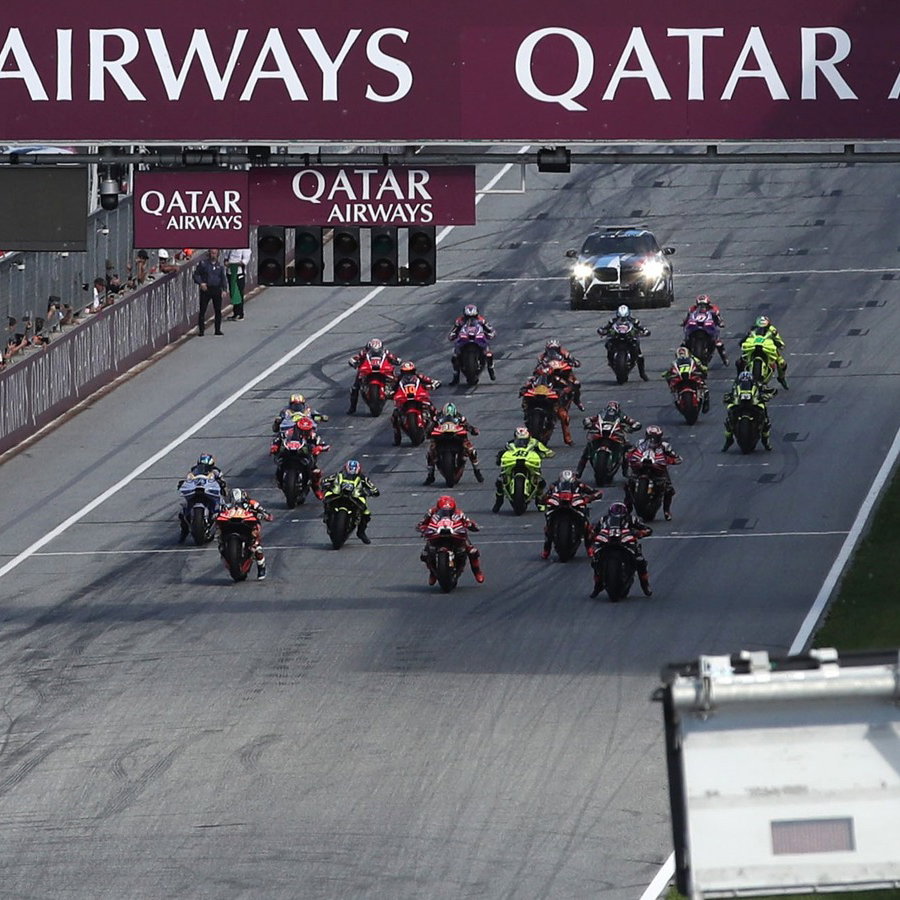
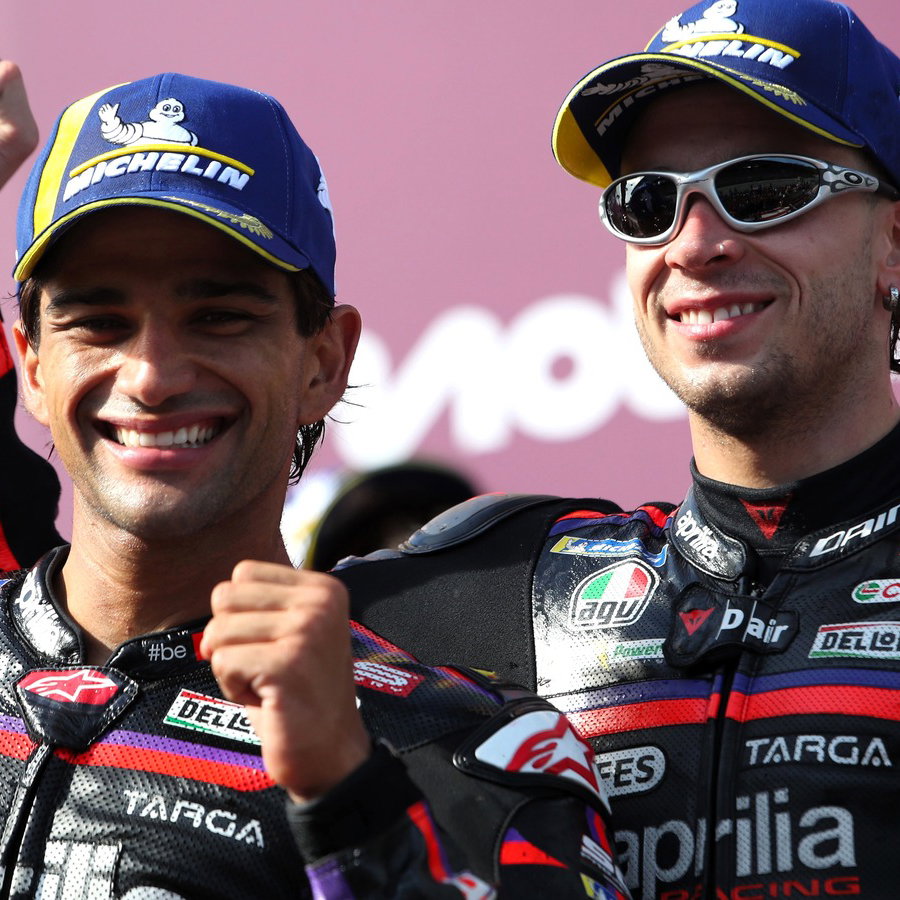
Motegi tyre allocation poses fresh concern for Marc Marquez and Ducati
The stiffer Michelin rear tyre that Ducati struggled with in Austria returns as part of this weekend’s expanded allocation for the Japanese MotoGP.

A resurfaced Motegi means a revised Michelin tyre allocation for this weekend’s Japanese MotoGP - including the reinforced rear construction that troubled Ducati in Austria.
With no testing data available for the new asphalt, Michelin has expanded its allocation to three front and three rear options, selected using simulations and information from previous Motegi events.
"Higher level of stiffness", "reinforced casing [from] Austria"
“At the front, the Soft, Medium and Hard retain the same level of stiffness as last year and all use symmetrical compounds,” explained Piero Taramasso, Michelin Motorsport Two-Wheel Competition Manager.
“The Hard [front], however, features a specific reinforced construction. This is a solution particularly well suited to certain Asian circuits and one that we will also offer at Mandalika.

“At the rear, we have selected a higher level of stiffness than in 2025 to give us an additional margin in view of the uncertainties associated with the new asphalt.
“The Soft and Medium use our standard casing, while the Hard [rear] features the reinforced casing that we already offered in Austria.”
Motegi has been a happy hunting ground for Ducati, which has won the last seven races, including a Sprint and GP double by Pecco Bagnaia in 2025.
Last year, on the old asphalt, riders favoured the medium front for both races, combined with a soft rear in the Sprint and medium rear for the grand prix.
However, if the hard rear proves most competitive on the new asphalt, it could be bad news for the Ducati riders, including title contender Marc Marquez, given the Desmosedicis struggled for grip on the same tyre last time at the Red Bull Ring.

"Again we struggled a lot"
Marquez finished second to Aprilia title leader Jorge Martin in the Austrian Sprint, after KTM's Pedro Acosta crashed from the lead, then recovered from early brake issues to take fifth in the grand prix as the leading Ducati.
But even without the braking issues, the reigning nine-time world champion looked unlikely to topple Acosta and Martin at what had been Ducati’s most successful track.
“In the end, [the tyres are] the same for everybody,” Marquez said about Ducati’s rear grip issues in Austria.
“It's true that we need to work well [on the stiffer rear tyre], because in Thailand we struggled a lot, here again we struggled a lot, but at least we were competitive.
“So let's see if we can improve for Mandalika especially, where again we have not this one, but another special casing.”
Marquez did not mention that the stiffer tyre would also be available at Motegi, where he wrapped up last year's title early with runner-up finishes behind Bagnaia.
The good news for Marquez and Ducati is that cool temperatures are predicted for Motegi this weekend, reducing the likelihood of the stiffer hard rear being the favoured choice.
“We will need to learn very quickly from Friday onwards and carefully monitor how the track evolves,” Taramasso said. “The weather could also play an important role, with relatively cool temperatures forecast and the possibility of rain.”
Motegi is immediately followed by Mandalika, where the most extreme version of the stiffer construction is used - and all Ducatis, barring Grand Prix winner Fermin Aldeguer, struggled last season.

Peter has been in the paddock for 20 years and has seen Valentino Rossi come and go. He is at the forefront of the Suzuki exit story and Marc Marquez’s injury issues.