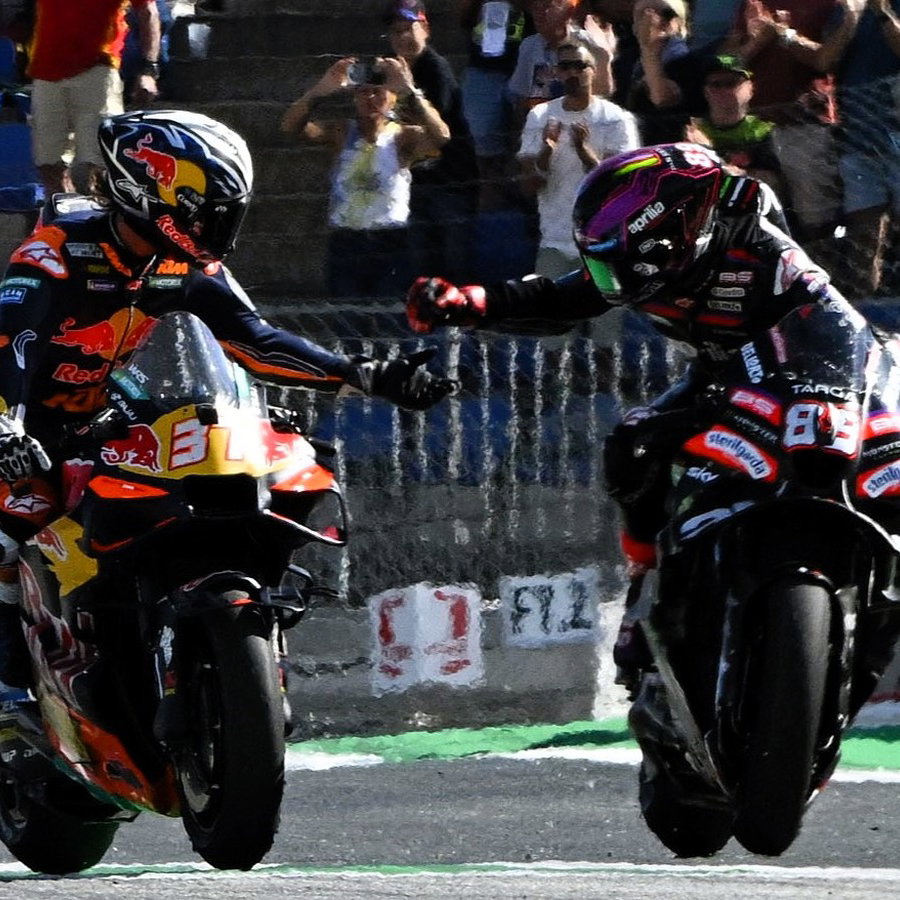
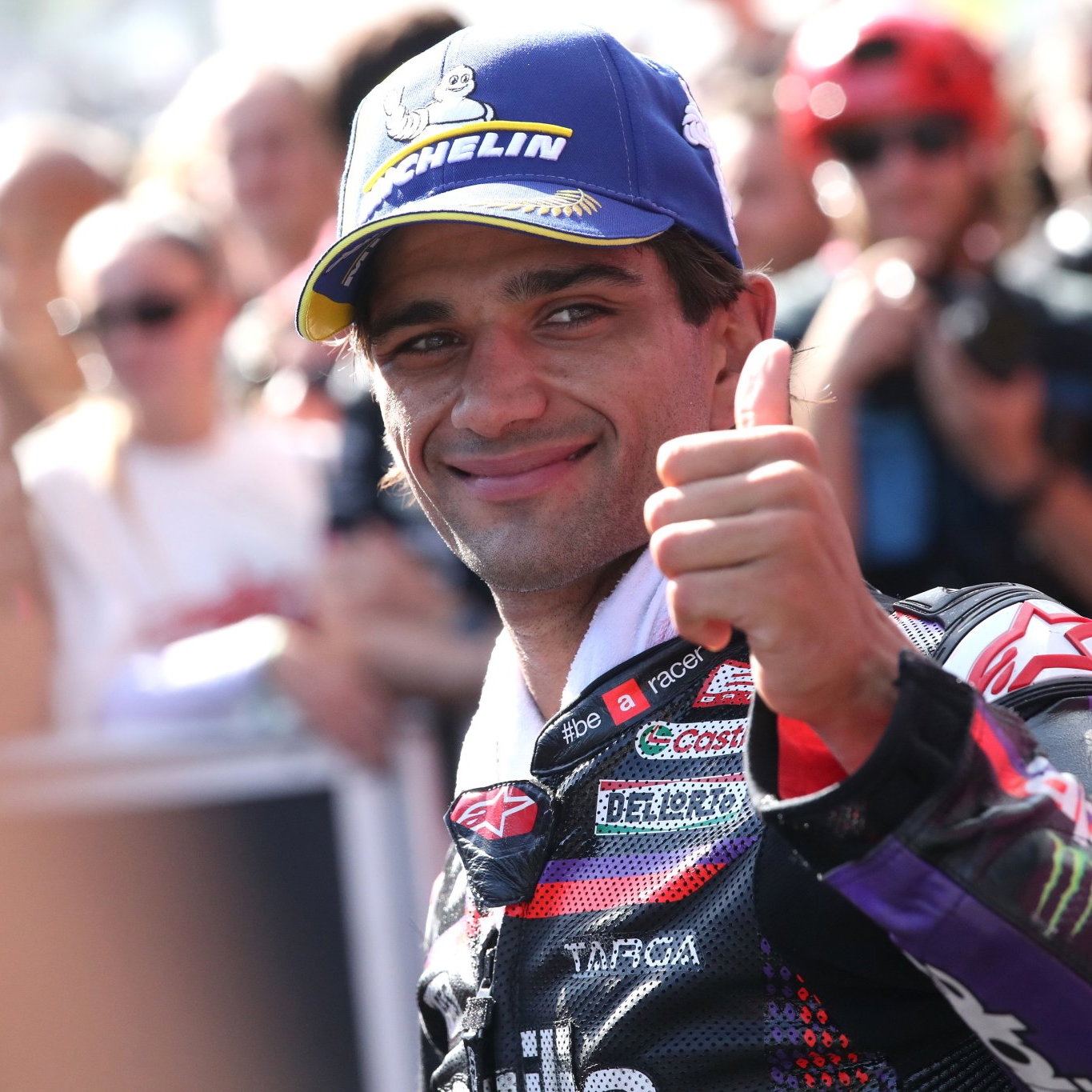
"30km/h slower" - How MotoGP’s holeshot device ban will affect starts
MotoGP's new front holeshot device ban has prompted a range of reactions, with riders expecting slower but safer starts.

This weekend's Assen races will see MotoGP riders start without front holeshot devices for the first time.
The ban on the lowering system has been brought forward, alongside revised grid spacing from next weekend's German Grand Prix, in a bid to improve Turn 1 safety.
Front holeshot devices, used only at the start, improve acceleration by reducing wheelies.
However, they require heavy braking at Turn 1 to disengage, which can catch out following riders.
Rear ride-height devices will continue to be used at the start and during races until the end of this season.
Extra practice starts will be held at Assen to help riders and teams prepare for the Sprint and Grand Prix.
Here is a selection of rider views from Thursday at Assen...

Luca Marini: “Crashes in Turn 1 will not disappear”
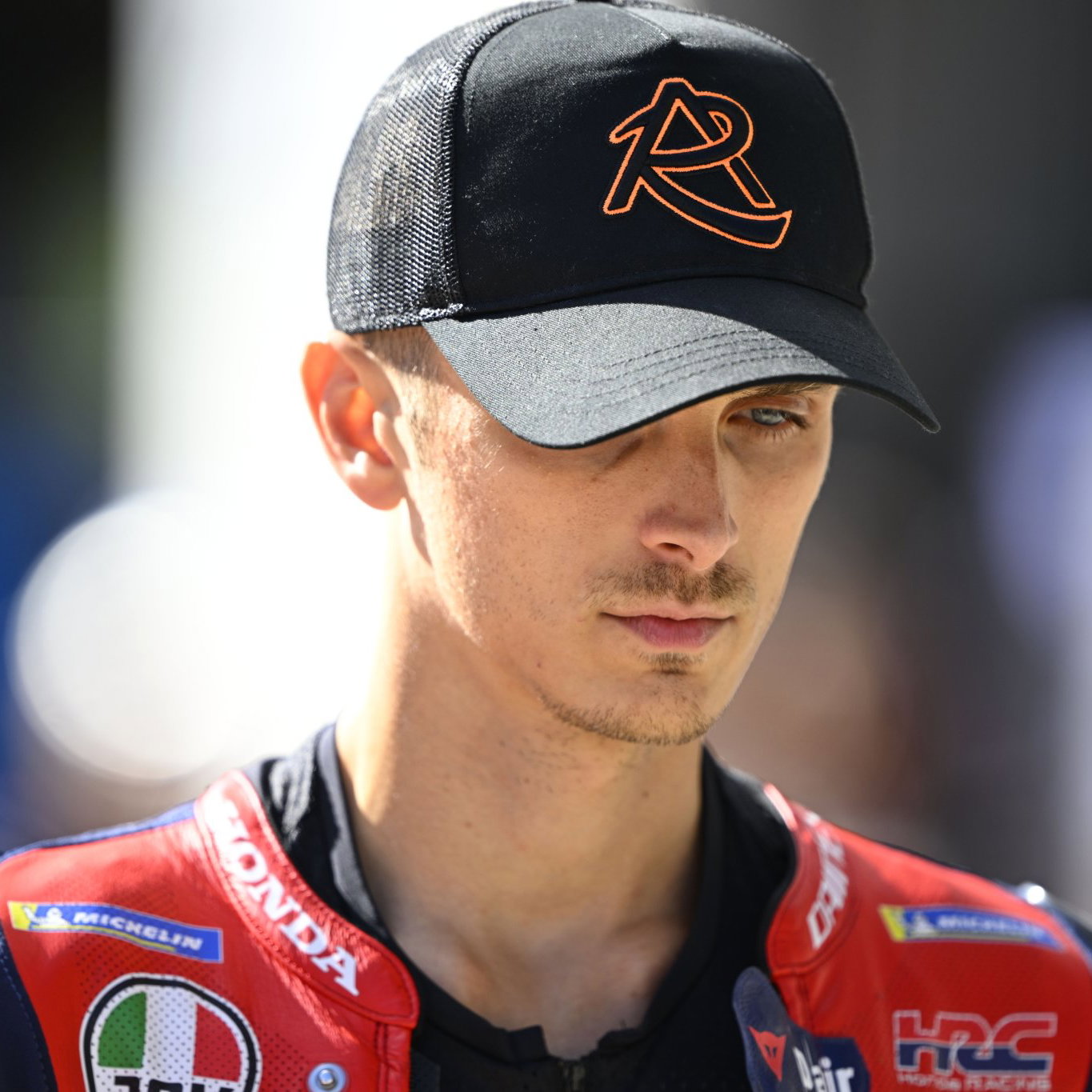
“For me it is nice, because we will have one thing less to think about [to disengage the front] when we are arriving at Turn 1,” said HRC’s Luca Marini.
“Sometimes, for some manufacturers, maybe the rear device cannot come up full. But it not a big problem, because if you make the corner with [the rear device lowered] it is not so dangerous as if you lock the front device.
“So for me it is a good change. Let's see how the start will be here in Assen.
“We’ll see if we can make a little bit more difference than the other manufacturers, because the Honda is always good in the start. Maybe it can be even better, or a little bit worse. We will see.
“But the crashes in Turn 1 will not disappear completely. Maybe we reduce a little bit the possibility, but it will be there. Because the start and the first corner is the only moment that you can overtake 3, 4, 5 riders, risking a little bit.
“If not, during the race it is impossible to overtake more than two, usually, apart from Ogura!”

Fabio Quartararo: “Wheelie tricky, braking safer”
“I think it’s good for the safety. It’s more tricky with the wheelie and everything on the straight, but in the braking points it’s safer,” said 2021 world champion Fabio Quartararo.
“You just need to get used to it because the bike will have a lot of wheelie.
“But you won’t have the same problem as in Le Mans [where it’s hard to disengage the device] and the bike is jumping everywhere, or Phillip Island and Silverstone where it’s really dangerous.
“But you had to use [the front holeshot] because everyone else is using it.”
Jorge Martin: “The talent will come out”
“Will be interesting. I tried two times with no holeshot and the difference between 0-100 km/h isn’t huge, but the bike is more difficult to manage," said 2024 world champion Jorge Martin.
“But the talent will come out because you need to manage with the throttle, manage the brake, the clutch.
“And before it was almost full gas and releasing the clutch. So I think for me it will be good for me, I think.
“The important thing is it is safer, this is why they did it. and we arrive a bit more slow to the first corner.”

Jack Miller: “You arrive 30 km/h slower”
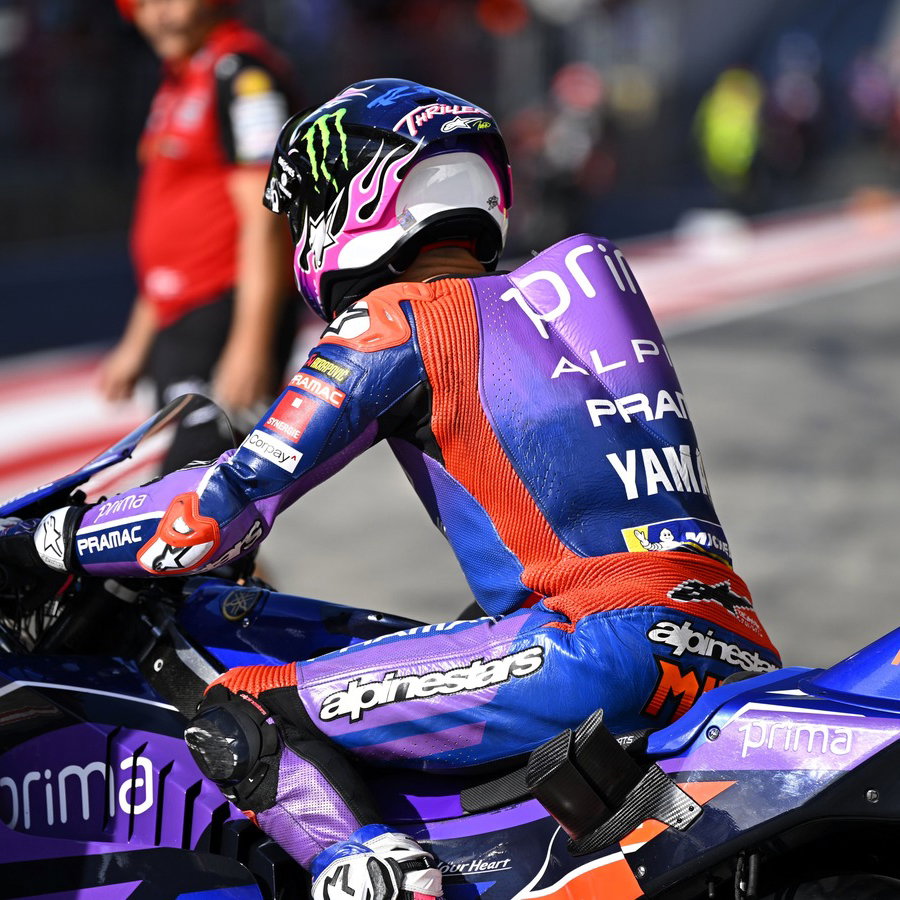
Martin may have said the performance difference isn’t huge, but Pramac Yamaha’s Jack Miller put a number to it:
“You arrive 30 km/h slower, so it’s not going to be more dangerous [to remove them]. That [difference] is the reason why we all use it every week, even if we can't get it unlocked at turn one. It's about getting there first.”
Miller dismissed concerns that bigger wheelies could be a safety concern.
“We had wheelies for 30 years. Look at the statistics on crashes at first corner with injuries in the last what is it 5-6 years since they introduced these devices. It's clear what's safe and what's not safe,” responded Miller.
“Wheelie is what's slowing you down essentially. It's physics, you can only go as fast as the wheelie will allow you, and it's how you manage the wheelie.
“So I'm in favour. I believe all of us having to grab a massive handful of front brake [to disengage the device], then releasing and then going into your normal braking, it's not natural. It's completely the opposite of being natural.
“So, removing the devices is a smart decision. I think it will create for better first corner action, as well as safer first corner action.”

Marco Bezzecchi: “Not the only solution”
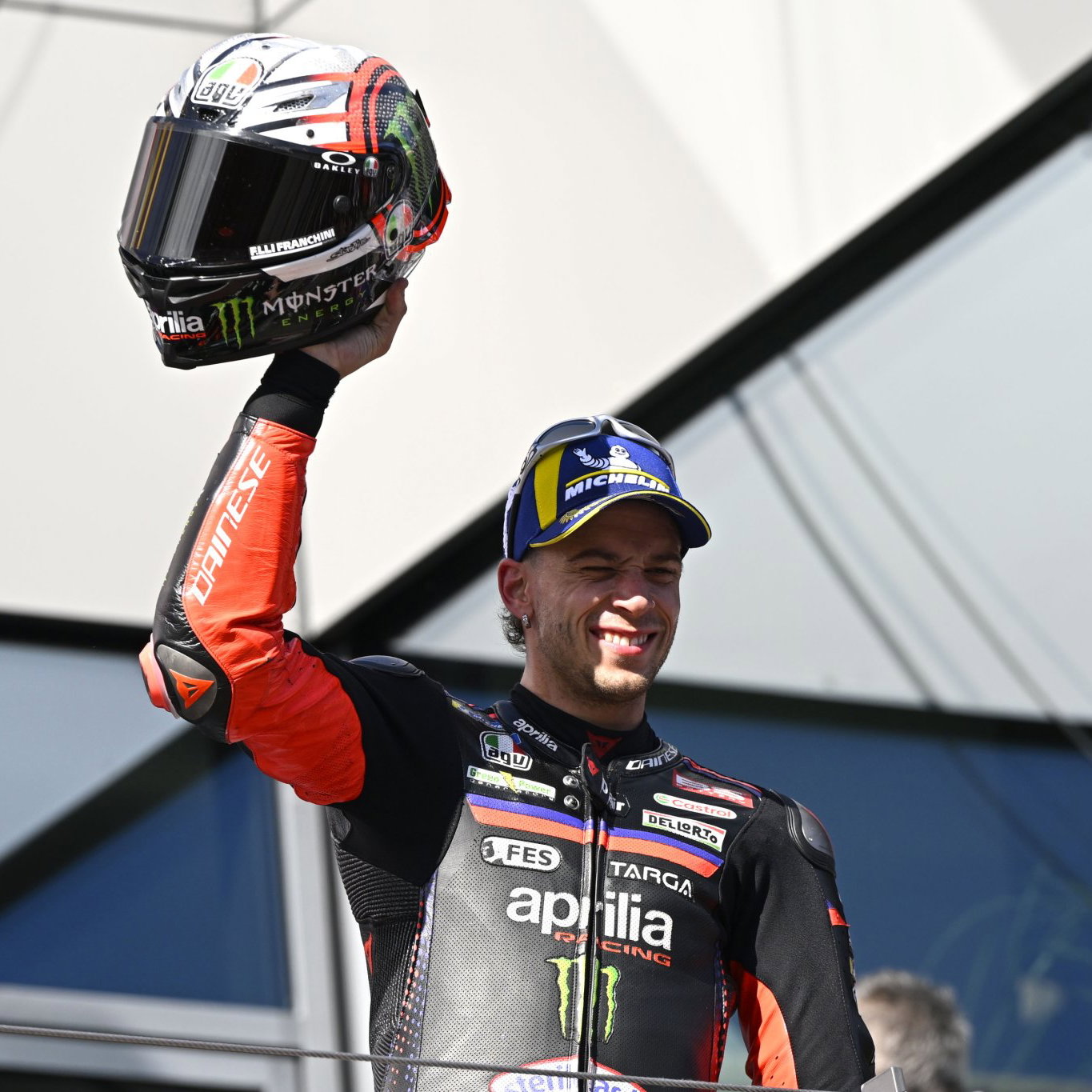
Current MotoGP World Championship leader Marco Bezzecchi sounded less convinced.
“This is a decision that we must accept,” said the Aprilia rider. “For sure it’s a difference and in terms of safety it can be better.
“It’s true I’m also one of the guys who thinks it’s not the only solution. But it’s good that they took a strong decision to try to improve [safety]. I accept it, I respect it and I agree.
“Then for sure will be tough to change everything but they gave us two sessions in Brno and will give us two also here, in terms of practice starts. So they are also helping us to try to adapt quickly.”
Diogo Moreira: “Interesting to see”
After half-a-season with the holeshot device, rookie Diogo Moreira will be going back to a more Moto2 style of race start.
“For sure it will be different, also it will be more interesting to see and to watch the starts. We need to play with the clutch, with the rear brake, the wheelie, so it should be good.
“We tried in Brno some starts without the front device and it was not so bad. Just we need to understand if we need to activate the rear one. Let's see. We're going to try tomorrow.
“I think for sure [it’ll be safer]. And also better to overtake in turn one, because we can play with the brakes.”

Peter has been in the paddock for 20 years and has seen Valentino Rossi come and go. He is at the forefront of the Suzuki exit story and Marc Marquez’s injury issues.